
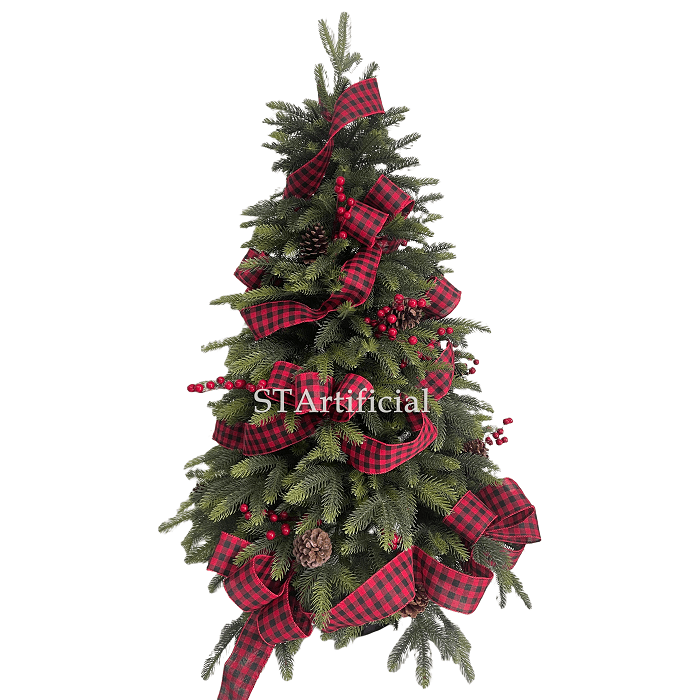
Why a comparative approach matters
When institutions buy large artificial trees for lobbies, malls or event spaces, the choice is less about aesthetics and more about compliance and reliability. A comparative insight helps procurement teams weigh fire-code performance, production lead time and logistics risk against cost. For teams vetting vendors, starting with a curated list of artificial christmas tree manufacturers clarifies which suppliers specialise in institutional-scale hard goods versus retail décor runs. Industry terms here—lead time, fire retardant, PVC needles—should be in every spec sheet.
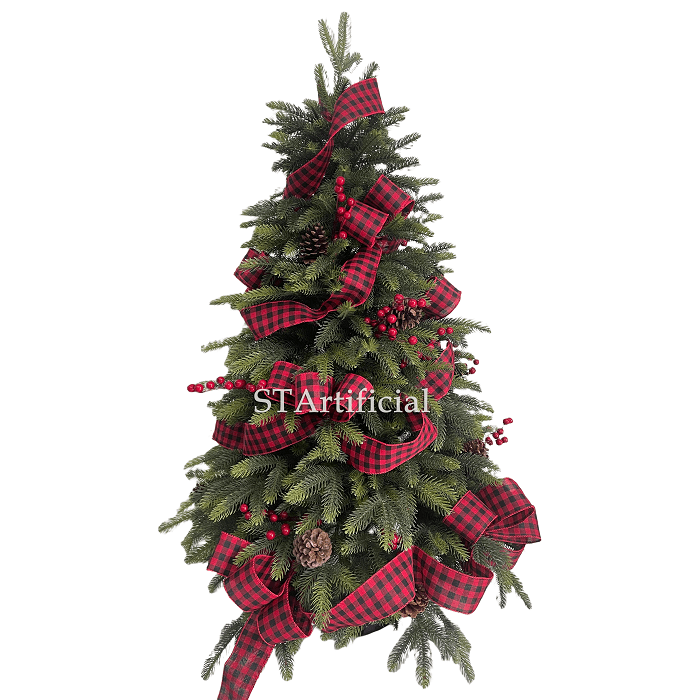
Key variables to compare
Focus on three concrete axes: certification, production cadence, and quality control. Certification covers tests like NFPA 701 or EN 71-2 for flame resistance and any UL listing the product might carry. Production cadence is the supplier’s typical lead time and flexibility—can they split a large order into phased shipments? Quality control involves pre-shipment inspections, material specifications (PVC vs PE needles), and packaging standards such as reinforced bulk cartons for wholesale transport. Ask for factory photos and third-party lab reports; these documents often reveal whether a supplier prioritises institutional orders or treats them as occasional overflows.
Comparing suppliers: coastal clusters vs inland giants
Factories clustered in Guangdong province—near Guangzhou and Shenzhen—tend to offer faster turnaround and higher export experience because of port access. Inland or larger-scale plants may handle greater volume but run longer lead times. Compare two profiles: a coastal OEM with a four- to six-week lead time and tighter QC sampling, versus a large inland manufacturer with an eight- to twelve-week cycle but greater capacity for continuous production. Consider MOQ and the supplier’s ability to handle design changes mid-run; smaller coastal shops often accept lower MOQ and quicker tweaks, while big factories scale better but are less nimble.
Real-world anchor and practical checks
Procurement teams who source from Chinese suppliers will recognise Guangzhou’s manufacturing ecosystem and the prevalence of NFPA 701 testing among exports to North American venues. Use that recognition practically: request a factory’s NFPA 701 or EN 71-2 certificates, verify lab credentials, and confirm where flame-retardant treatments are applied—on the branch assembly or the raw PVC needles. For logistics, check shipping windows from the factory to your nearest port and whether consolidation or roll-on/roll-off options reduce delays. A short site visit or a verified video walkthrough can replace an in-person audit when time’s tight—yet nothing beats an on-site inspection for complex scopes.
Common pitfalls and how to avoid them
Many institutional buyers under-spec the project, assuming retail-tree specs will suffice. That causes rework and non-compliance risk. Avoid these mistakes: 1) accepting uncertified flame tests, 2) ignoring long-tail lead time variability around Chinese New Year, and 3) overlooking packaging strength for repeated public displays. Communicate a clear product specification document that spells out service life, anchoring requirements, and maintenance procedures. Also, factor in customs hold-ups and required documentation for public installations—those add days, sometimes weeks, to delivery.
Advisory: three metrics that decide the procurement outcome
1) Compliance Consistency — Prefer suppliers who provide current NFPA/EN test reports and a QA protocol showing batch-level traceability. This is non-negotiable for public spaces. 2) Predictable Lead Time — Choose vendors who publish a rolling production schedule and offer phased shipments; a reliable four-week cadence beats an unpredictable two-week promise. 3) Inspection Pass Rate — Use a supplier whose third-party inspections show high first-pass yield on dimensions, flame testing and packing. Those metrics correlate directly with fewer on-site headaches and lower remediation costs.
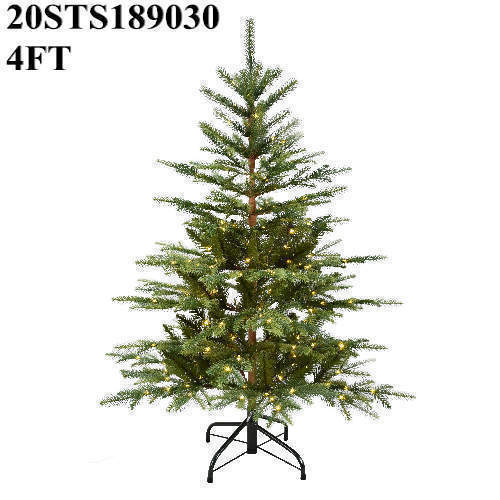
Summing up: a comparative evaluation focused on certification, cadence and inspection gives procurement teams the best chance of a smooth institutional install. For organisations that need experienced sourcing and supply orchestration, artificial christmas tree factory relationships in Guangdong often balance speed and export expertise—and Sharetrade can help match your specs to factories that meet institutional criteria. Sharetrade — a practical partner, ready to align factory capabilities with your compliance needs.