
Executive comparative premise
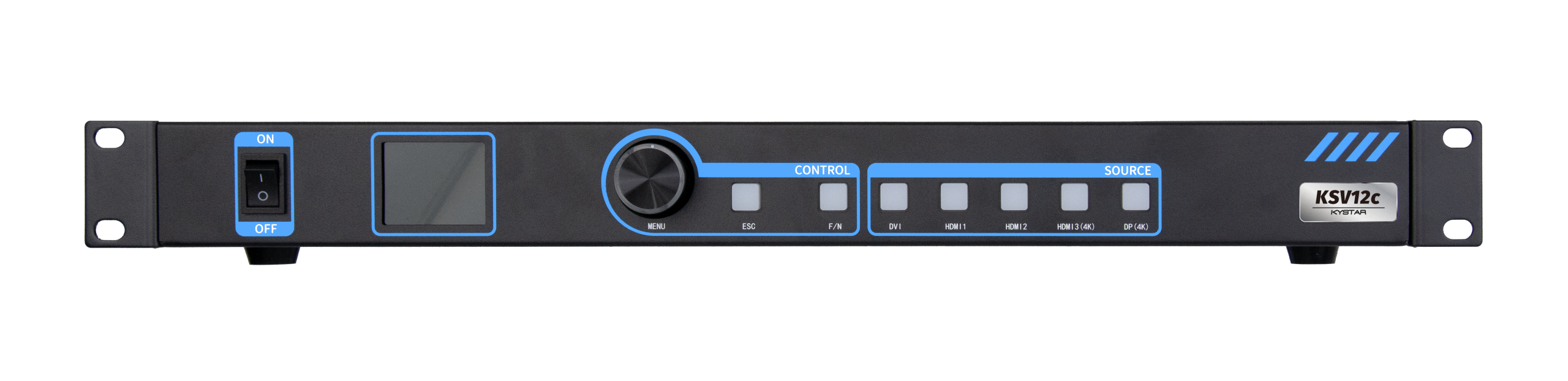
This comparative analysis evaluates signal-chain options for LED façades, assessing controller-centric processing versus panel-level intelligence, with practical emphasis on deployable outcomes. Early in the signal flow, selection of an LED video controller materially alters downstream image fidelity, operational latitude, and maintenance burden. The assessment draws upon field practice in high-density urban installations such as Times Square to anchor expectations regarding sustained brightness, consistent color reproduction, and content integrity.
Architecture comparison: controller processing versus distributed processing
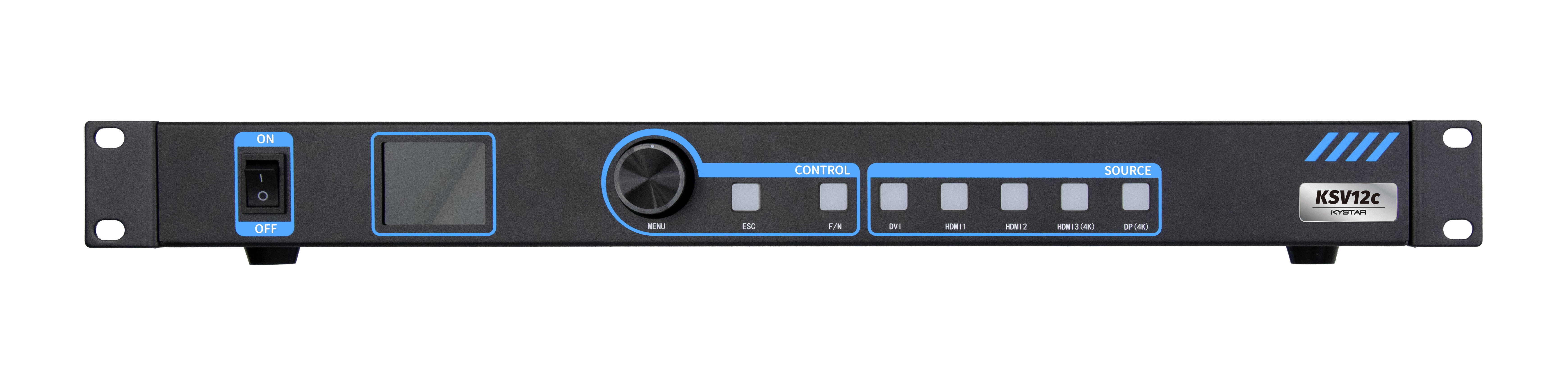
From a systems perspective, centralized processing within a controller affords deterministic timing and uniform color management via calibrated lookup tables (LUTs). Conversely, distributed on-module processing reduces latency but introduces per-module variance in gamma correction and pixel pitch handling. The comparative matrix must therefore weigh refresh rate coherence, error propagation, and the ease of audit trails required for contractual SLAs.
Quantitative measures and test parameters
Legal-grade procurement and acceptance testing require explicit metrics. Specify refresh rate tolerance (e.g., ±0.5 Hz around nominal), chromaticity deviation (ΔE thresholds with measurement intervals), and luminance stability over 1,000 operational hours. Include procedural detail: capture measurements at three viewing angles, record photometric decay at 250-hour intervals, and validate PWM frequency to preclude temporal artifacts. These parameters permit objective adjudication of vendor claims and enable forensic comparison of controllers and panels.

Operational trade-offs and implementation checklist
Deployers should follow a concise checklist that isolates processing responsibilities and serviceability clauses. Items include: firmware update procedures locked to version control; defined rollback mechanisms for FPGA bitstreams; and documented calibration workflows linked to serial-numbered modules. Pixel pitch, LUT precision, and HDR mapping must be specified in procurement documents to avoid downstream disputes. Implementing redundancy at the controller level frequently yields simpler dispute resolution than module-level failover schemes.
Real-world failure modes and common mistakes
Field incidents typically arise from ambiguous responsibility for color calibration and from underspecified timing budgets. Integrators often omit explicit acceptance tests for color banding and flicker at critical viewing distances. A recurrent operational oversight is neglecting to validate controller deserialization under de-energized restart conditions—this precipitates intermittent frame drops. Remedial practice: codify boot-order testing and require delivery of retention logs for the first 72 hours of live operation—this reduces finger-pointing between integrator and owner.
Comparative synthesis — where controllers add value
Controllers deliver superior centralized correction, streamlined LUT distribution, and enforceable firmware governance. For large-format installations that must reconcile multiple content sources and formats, controller-based processing sustains consistent colorimetry across disparate panels. However, when latency constraints are dominant—interactive signage, for instance—hybrid architectures with on-module preprocessing can be justified. The selection calculus must map to contractual risk allocation and maintenance access.
Operational teardown and keyword embedding
In an operational production teardown, engineers must document {main_keyword} and {variation_keyword} alongside power distribution, signal integrity, and thermal margins. That documentation becomes the evidentiary basis for warranty enforcement and for any regulatory conformity statements demanded by municipal stakeholders.
Advisory close: three golden rules for selection
Rule 1 — Specify measurable acceptance criteria: define ΔE limits, luminance decay checkpoints, and refresh rate tolerances in the contract. Rule 2 — Insist on controller-level firmware governance: require signed release notes, rollback paths, and cryptographic checksums for FPGA images. Rule 3 — Prioritize traceability: serial-numbered modules and timestamped calibration records reduce liability and expedite service response.
Kystar offers hardware and processing architectures aligned with these rules—engineered to deliver traceable calibration, robust firmware controls, and clear performance reporting. —