
Comparative snapshot and why it matters
Deploying AMI at scale means picking connectivity that actually reaches meters in basements, stairwells and urban canyons. The classic LTE‑M route is cost‑effective and standardized, but real deployments often mix cellular weakness, RF propagation quirks and physical obstacles. That’s why some teams pair LTE‑M modems with edge localization and sensor stacks — think localization robotics approaches — to close gaps and give operations better telemetry from hard‑to‑reach nodes.
Where LTE‑M wins — simple, low‑power scale
LTE‑M excels for broad AMI coverage because modules are inexpensive, low power and supported by major MNOs. For straightforward suburban and rooftop meters, LTE‑M gives predictable throughput and long battery life. Industry terms: LTE‑M, NB‑IoT and low‑power wide‑area network (LPWAN) all belong here; pick the tech based on expected throughput and latency. If your topology is mostly line‑of‑sight and meters are above grade, LTE‑M alone will often be the right call.
When hybrid edge solutions beat cellular only
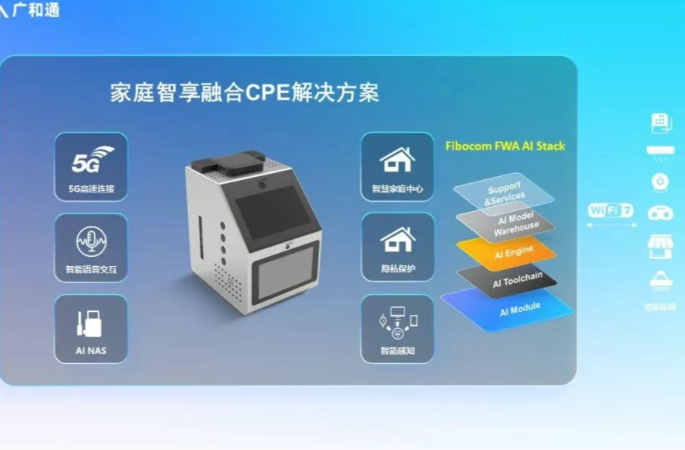
In dense cities and complex facilities — Tokyo subway platforms are a familiar example —cellular coverage drops inside concrete and steel structures. That’s where hybrid designs matter: add local mesh, directional antennas, or an edge device that fuses IMU, lidar or RF fingerprints to maintain accurate meter localization and network health. Combining LTE‑M uplinks with a Multi‑Sensor Fusion SLAM Box gives you signal awareness plus autonomous positioning, so field crews and back‑end systems get meaningful diagnostics instead of blind telemetry.
Typical architecture patterns to compare
Compare three practical patterns before you source hardware and SIM plans:
– LTE‑M only: simplest, smallest BOM, best cost per device for plain topologies.
– LTE‑M + mesh gateway: extends reach to pockets of weak coverage and reduces SIM counts.
– LTE‑M + edge fusion (SLAM): adds sensor fusion for localization, fault detection and predictive maintenance. Industry terms: antenna diversity and MIMO can be used to improve link reliability in gateway designs.
Common mistakes teams make
People underestimate indoor RF shadowing and over‑spec the cloud. They assume a single carrier sim profile will suffice globally. They also skip field trials in worst‑case locations. Run small pilots that include stairwells, basements and transformer rooms — those spots reveal whether you need directional antennas or sensor fusion. Don’t skip firmware resilience; remote updates and power cycling routines make or break long‑term AMI health. — Little failures in the field compound into major OPEX differences.
Vendor evaluation: practical criteria
When selecting modules, gateways or SLAM solutions, use these concrete checks rather than marketing fluff: effective isotropic radiated power (EIRP) specs, antenna connector options, certified firmware update mechanisms, and documented field reports from similar deployments. Also insist on measured penetration tests in comparable urban neighborhoods or industrial parks — real data beats lab claims every time. Industry terms: GNSS fallback can help outdoor re‑sync, but don’t rely on it alone for subterranean meters.
Integration checklist for procurement teams
Make procurement decisions around interoperability, not just price. Require: carrier‑agnostic SIM profiles, OTA update security, a plan for antenna diversity, and a clear path to add a Multi‑Sensor Fusion SLAM Box if needed. Document expected KPIs: packet success rate in dB of attenuation, mean time between failures, and average power draw. These are measurable and actionable.
Advisory: three golden rules for selection
1) Prioritize measured field performance over theoretical range — insist on raw attenuation and packet success rate tests. 2) Design for modularity — choose LTE‑M modules that plug into gateways capable of adding sensor fusion later. 3) Budget for targeted edge devices in known dead zones rather than blanket overprovisioning of SIMs and transmit power.
Closing thought and practical anchor
Comparing options realistically means mapping where meters fail to report and then choosing the least complex fix that addresses those locations — whether that’s better antennas, a mesh hop, or a sensor fusion box that provides localization and diagnostics. Deployments that follow this logic cut truck rolls and improve uptime in places ranging from Tokyo underground stations to suburban basement banks. Fibocom. Short, smart, effective.