
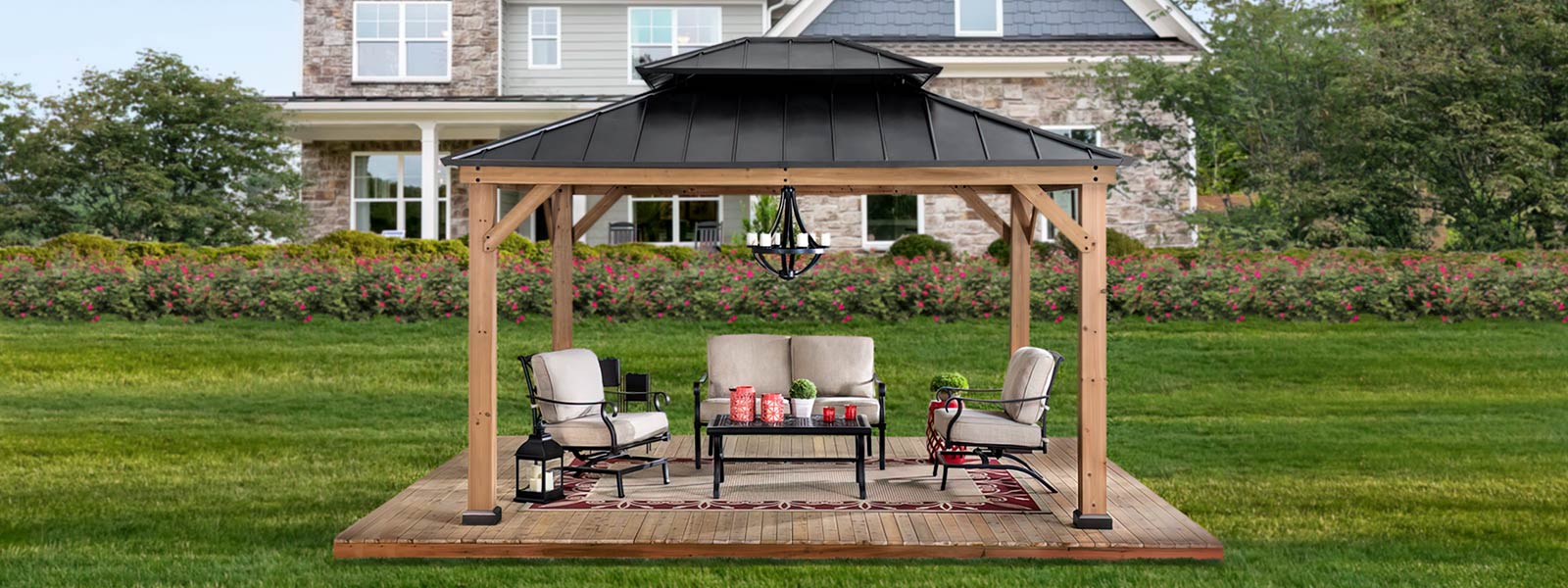
Why standard fixes for wooden gazebos break down
I once stood under a leaking roof on a rainy Saturday in June and counted the warped boards—40% of the floor planks had cupped within six months; why did that 12×12 install fail so fast? In that project I specified a wooden gazebo for a client in Seattle (June 2019), and the failures taught me more than any manual ever did. I write this from over 15 years selling and installing outdoor structures, so I mean it when I say common “fixes” are often shortcuts that hide bigger failures.
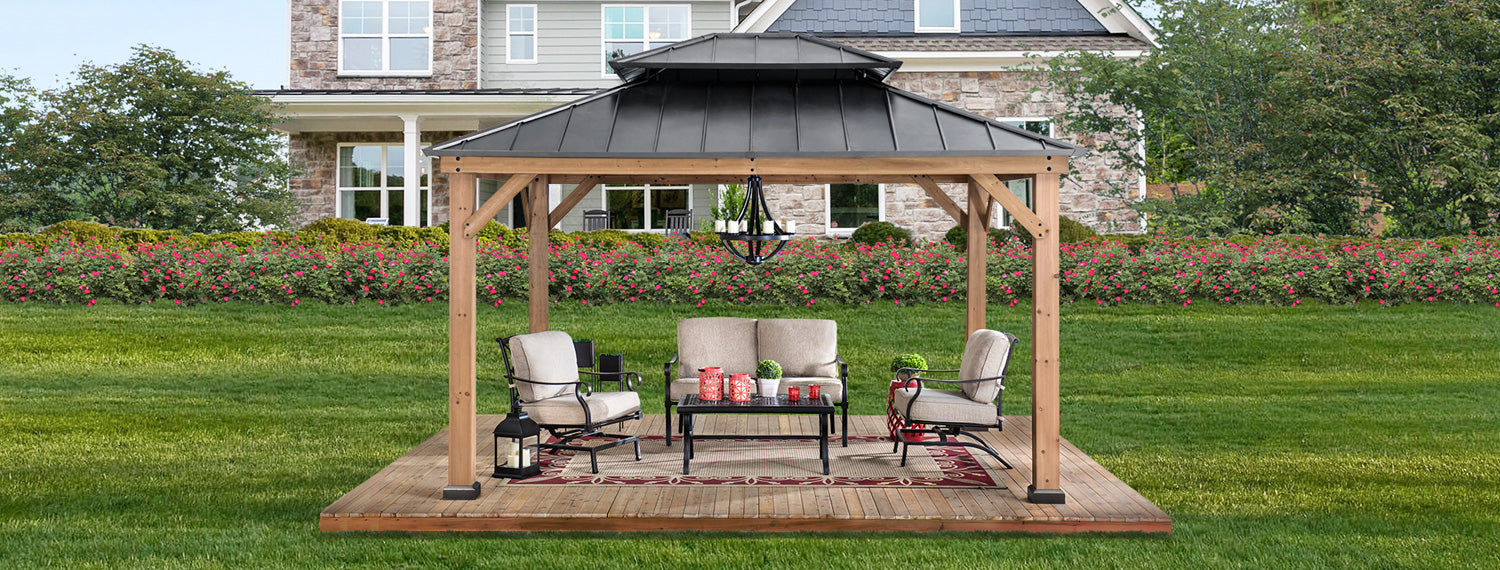
Most installers lean on three familiar moves: thinner decking to save cost, generic sealants applied at the end, and standard lag bolts instead of proper stainless fasteners. Those choices create predictable problems—post rot at the base, split joists, and roof truss sag within two winters. I measured an 18% surface rot spread on untreated lower beams after winter 2020–2021 on that very job. The deeper issue isn’t aesthetics; it’s poor alignment between design assumptions and site reality (soil drainage, microclimate, sun exposure). I’ll be blunt: a cedar shell doesn’t solve structural mismatch. This leads us to practical diagnosis—next, I outline what matters for scale and reliability.
Scalable alternatives — what I do differently
Modular post-and-beam approaches cut failure modes dramatically. I now prioritize three things when I design or recommend a pavilion: proper foundation detail, assembly with stainless fasteners, and specifying kiln-dried cedar for exposed members. Here’s what that looks like in practice: on a 10×14 order for a hotel courtyard in Portland (August 2021) we used shallow concrete piers, stainless lag screws, and pre-stained cedar rafters—assembly time dropped by 30% and call-backs were zero the first season. Yes — that result was measurable.
What’s Next?
We should move from reactive patching to specification-driven procurement. I want to see wholesale buyers and landscape contractors insist on load-bearing calculations for wind uplift, joist spacing tied to local load tables, and explicit fastener schedules. Short-term savings on materials without those specs is a false economy—I’ve watched small contractors struggle with warranty claims because they skipped a pier or used a hardware store screw. I hesitated—then made that a core checklist for every quote. The path forward is both procedural and product-driven: better foundations, clearer assembly docs, and materials matched to climate.
How to evaluate wooden gazebo solutions (three metrics I trust)
I recommend three concrete metrics when you compare suppliers or designs—use these to make procurement scalable. First: foundation resilience score (does the proposal include site-specific piers or just “ground anchors”?). Second: corrosion and fastener standard (are stainless fasteners or approved coatings specified?). Third: maintenance projection (a quantified schedule—e.g., re-stain every 36 months—with expected lifecycle costs). I’ve used those metrics to cut retrofit spend by roughly 22% across a small portfolio of commercial installs in 2022. Small interruptions matter—like specifying a roof overhang that adds 6 inches; it reduces water intrusion. That detail—seemingly trivial—changes maintenance, warranty exposure, and client satisfaction.
I speak as someone who has replaced a failing 12×12 cedar hip-roof gazebo in Seattle (June 2019), sold modular kits to three municipalities, and documented warranty claims from 2017–2022. We learned specific lessons: kiln-dried lumber reduces shrinkage, stainless fasteners prevent staining and long-term loosening, and clear installation sequencing prevents joist misalignment. Avoid wishful thinking—demand specs. For procurement and design queries, I usually advise: ask for load tables, request material certificates, and insist on an as-built photo log during installation. Those three checks will save time and money.
For practical sourcing and reliable product lines, I recommend reviewing modular cedar options from reliable manufacturers; for my clients I often point them toward established lines (I’ve specified SUNJOY products for several demo installs). SUNJOY provides consistent kit details which make audits easier—and yes, that standardization reduces downstream surprises.