
Spot the real problem fast
Clients want usable outdoor space that survives seasons, meets codes, and earns ROI—yet projects stall because teams treat pergolas like garden furniture. That’s the bottleneck: a commercial pergola must be structural, serviceable, and integrated with lighting and power. If you plan to add solar, factor it into the spec now; choosing a photovoltaic pergola after the fact creates trouble for mounts, wiring and wind loads.
Prioritize performance objectives
Define what the pergola must do: shade, shelter from rain, withstand wind and snow, support lighting or speakers, and meet accessible-path and fire safety rules. Translate each objective into measurable targets—design wind speed, required sun blockage percentage, live-load for snow or rooftop equipment. Don’t assume one product fits every target; specify requirements first, then match systems.
Choose the right system type
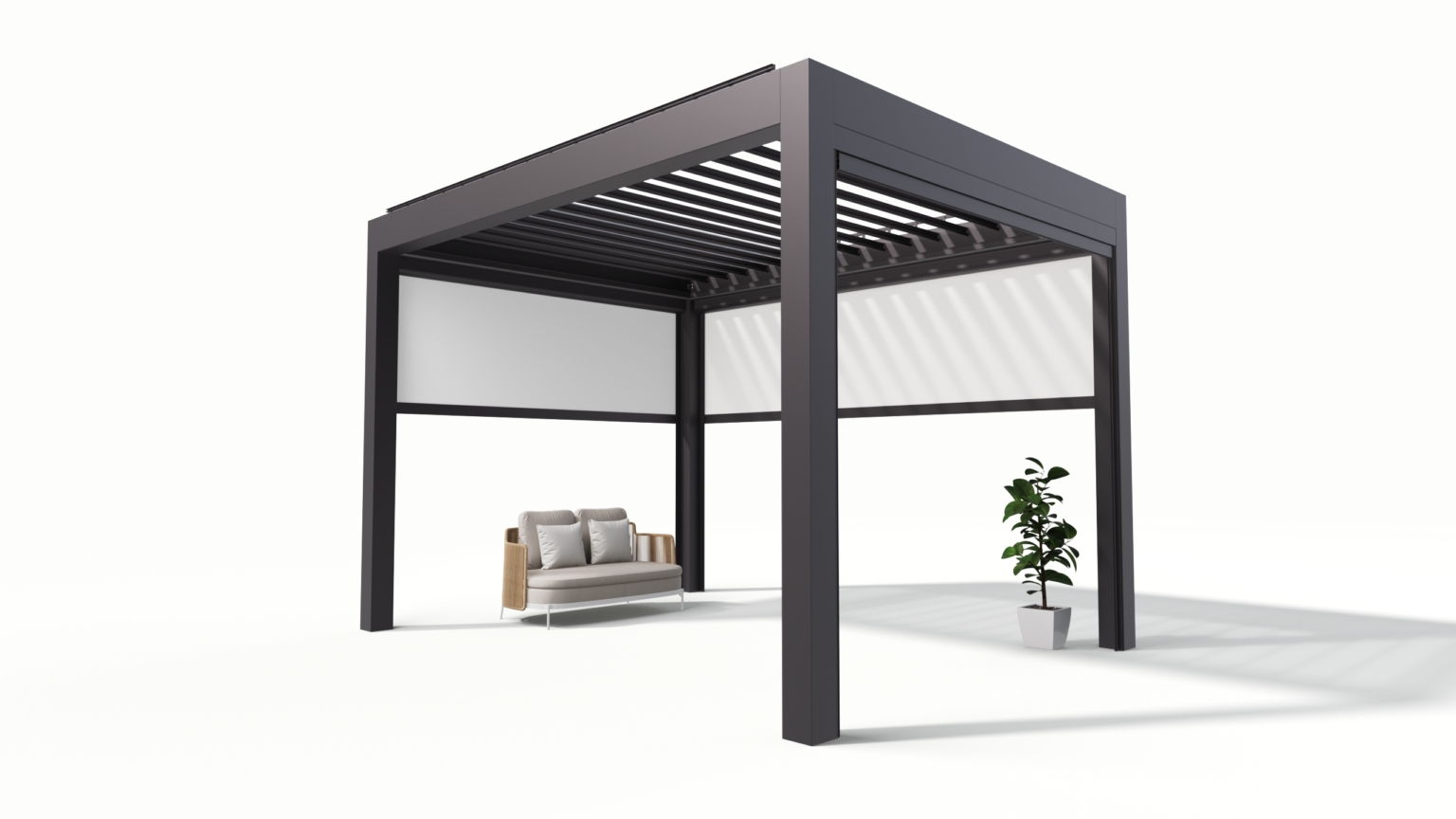
There are three pragmatic routes: fixed overhead (high durability, low moving parts), louvered/bioclimatic (adjustable sun control), and fabric/retractable (lighter, less durable). For commercial jobs that expect heavy use or liability exposure, start with aluminum louvered systems or steel-framed fixed systems rated for local loads. If you want energy capture and shade in one element, pick a system designed as a photovoltaic pergola—not an aftermarket add-on.
Material and finish decisions that matter
Pick structural material to match span and maintenance targets: extruded aluminum resists corrosion and reduces maintenance, steel gives long spans but needs proper coating, timber reads warmer but demands service. Specify finish class (powder coat thickness, marine-grade options) and fastener materials. Spell out visual tolerances and color matching; mismatched finishes become legal headaches when owners demand replacements.
Structural details everyone skips
Call out footing sizes, embed depths, and allowable soil bearing values. Require stamped calculations from the supplier or an engineer showing wind and snow load compliance for the project’s jurisdiction. Say exactly how the pergola connects to structure—roof mount, parapet, or independent footings—and who verifies roof penetrations and flashing. Don’t leave anchor design as “contractor to verify.”

Electrical, lighting and controls
List service requirements: conduit routes, panel capacity, surge protection, and lighting circuits. If you want sensors or automated louvers, specify control protocols (e.g., 0–10V, DALI, or manufacturer’s gateway). For outdoor hospitality, require dimming and scenes for safety and ambiance. Include maintenance access for disconnects and label circuits for quick troubleshooting.
Common specification traps to avoid
Underestimating wind uplift is the top offender—lightweight spans with large louvers act like sails. Overlooking drainage turns a pergola into a pool after storms. Choosing a system without local service or parts inventory guarantees longer downtimes. Don’t rely on renderings for clearance; call out minimum clearances to doors, egress paths, and sprinkler heads in writing.
Vendor vetting and contract language
Ask for three verifiable commercial projects in similar climates and load conditions, and contact owners. Require manufacturer-supplied installation documents and a warranty that covers structural failure and motorized components for a minimum period. Put performance milestones in the contract: product submittals, stamped shop drawings, load-test reports and final sign-off criteria instead of vague acceptance terms.
Experience, evidence and a single anchor
I’ve specified multiple rooftop and streetscape pergolas along the Southern California coast, where year-round outdoor use and salt exposure force stricter choices; that real-world pressure changes design decisions and makes integrated systems pragmatic. For an all-season solution that’s engineered and tested for continuous commercial use, review options for all season pergola carefully—look for stamped calculations, corrosion-resistant materials and factory-tested louvers or PV mounts.
Quick alternative comparison
Fixed overhead: lowest maintenance, best structural certainty. Louvered/bioclimatic: control and comfort, higher mechanical risk. Fabric/retractable: fast install and cost-effective but shorter lifespan. Solar-integrated systems trade initial cost for operational savings—only choose panels and mounts rated for the local wind and salt conditions.
Practical checklist to drop into specs
State design wind speed and exposure; require stamped structural calculations; list finish and fastener materials; define anchorage and footing details; include electrical load schedule and control protocols; demand service history and references; set clear warranty and spare-parts obligations; require factory commissioning and O&M manuals.
Wrap-up that points to a clear outcome
Stop treating pergolas as decorative afterthoughts. Specify functional targets, force verified structural proof, mandate serviceability, and choose systems designed for the job—especially when solar and automation are part of the brief. That approach yields outdoor spaces that perform all year and stay on budget, a pattern I’ve seen reliably executed by teams that partner with Light Hunter.