
Opening: why the numbers must lead the conversation
In a world where grid stress is no longer hypothetical — recall the Texas winter 2021 failures and California’s heat‑wave driven outages — the quiet drain of auxiliary systems can mean the difference between a resilient battery installation and one that falls short when called upon. A data-driven lens clarifies where losses hide: from thermal control fans to idle inverters and BMS telemetry. For anyone specifying commercial energy storage, understanding and curbing auxiliary consumption is a practical mandate as much as an engineering art.
Mapping the data: what we measure and why it matters
Begin with a clear telemetry baseline. Measure continuous parasitic loads (fans, control electronics), intermittent draws (contactors, HVAC cycles), and start-up surges. Use high-resolution power logging to capture millisecond events and correlate them with system states such as charge/discharge, standby, and maintenance modes. Industry terms to keep in hand: round-trip efficiency (RTE), inverter standby losses, and battery management system (BMS) quiescent current. These diagnostics reveal whether auxiliary draw is a minor nuisance or a systemic reducer of usable capacity.
Where auxiliary consumption hides
Auxiliary draw often masquerades in plain sight. Common culprits include:
– Thermal management: compressors, heaters, and circulation fans that maintain cell temperature. – Power conversion subsystems: inverter idle consumption and transformer losses during standby. – Control and communications: BMS telemetry, SCADA links, and site security systems. – Safety and auxiliary relays: contactors, pre‑charge resistors, and cell balancing circuits.
Each element contributes to net system availability. Even a few hundred watts of continuous parasitic load reduce delivered energy over long islanding events — a small steady leak that matters when every kilowatt-hour counts.
Modeling effects on round‑trip efficiency and usable energy
Integrate auxiliary profiles into energy and capacity models. Adjust round‑trip efficiency by subtracting auxiliary energy consumed during typical duty cycles; this yields an “effective RTE” that reflects real-world service delivery. Factor in state of charge (SoC) windows: auxiliary systems that remain active during low-SoC hold modes disproportionately erode available reserve. Use cycle-life projections to account for the thermal penalties imposed by continuous cooling or heating — thermal control is both a performance enabler and a lifecycle cost vector.
Design strategies to minimize parasitic draw
Data suggests three pragmatic levers reduce auxiliary waste:
– Right‑sizing thermal systems: exploit passive thermal design where climate and packaging permit, and implement variable-speed fans and intelligent thermostatic control where active cooling is unavoidable. – Smart power architecture: choose inverters and DC/DC converters with low idle consumption; implement staged wake modes so full-power electronics remain in sleep until needed. – BMS efficiency and communications: optimize telemetry cadence and use event-driven reporting rather than continuous high-bandwidth streaming; tune balancing intervals to the state of health and not a fixed calendar schedule.
Operational tactics and controls
Adopt control logic that anticipates grid events and manages auxiliaries accordingly. For instance, during prolonged discharge aimed at critical loads, scale back nonessential services and shift monitoring to periodic snapshots. Implement rule sets that vary auxiliary operation by use case — peak shaving, backup, or frequency regulation — so overhead is proportional to value delivered. Such adaptive strategies preserve usable kilowatt-hours while maintaining safety margins.
Common mistakes and how to avoid them
Teams frequently err by focusing only on cell chemistry and inverter ratings — neglecting the quiet drains. Typical missteps include: underestimating idle inverter losses; specifying a BMS with feature-rich telemetry but without power‑saving modes; and failing to test on real load profiles. A simple remedy: require full-system energy audits during commissioning, including thermal chambers or hot/cold soak tests where relevant — and insist on measured auxiliary energy figures in vendor datasheets. —
Trade-offs and comparative choices
Mitigation is rarely free. Passive thermal designs reduce parasitic power but may require larger enclosures or stricter site siting; low‑idle inverters often cost more upfront but pay back in extended on-grid performance. When comparing commercial offers, ask for measured Watts-per-kWh of auxiliary draw under typical operation, not theoretical minima. Also compare maintenance burden: systems that reduce auxiliary complexity often lower long‑term failure risk and service visits.
Real‑world anchor: lessons from large‑scale deployments
Operators in California’s utility-scale projects reported that auxiliary loads materially affected summer reserve margins during 2020–2021 stress periods. Those projects that specified adaptive thermal controls and low‑quiescent electronics sustained longer dispatch windows during heat waves. This practical experience underscores the importance of specifying both component efficiency and system-level control logic when procuring commercial energy storage systems.
Advisory: three golden metrics to choose by
When evaluating designs, use these critical metrics as your north star:
1) Auxiliary Energy Intensity (AEI): measured Wh of auxiliary consumption per kWh of stored energy per day — lower is better and immediately comparable. 2) Effective Round‑Trip Efficiency: RTE adjusted for auxiliary drains during the representative duty cycle — this is your true delivered efficiency. 3) Standby Duration Impact: estimated reduction in reserve hours attributable to continuous auxiliary loads under islanding conditions — a practical measure for resilience planning.
These metrics make vendor claims tangible and allow apples‑to‑apples comparisons across architectures. In practice, they guide procurement toward solutions that balance performance, lifecycle cost, and reliability.
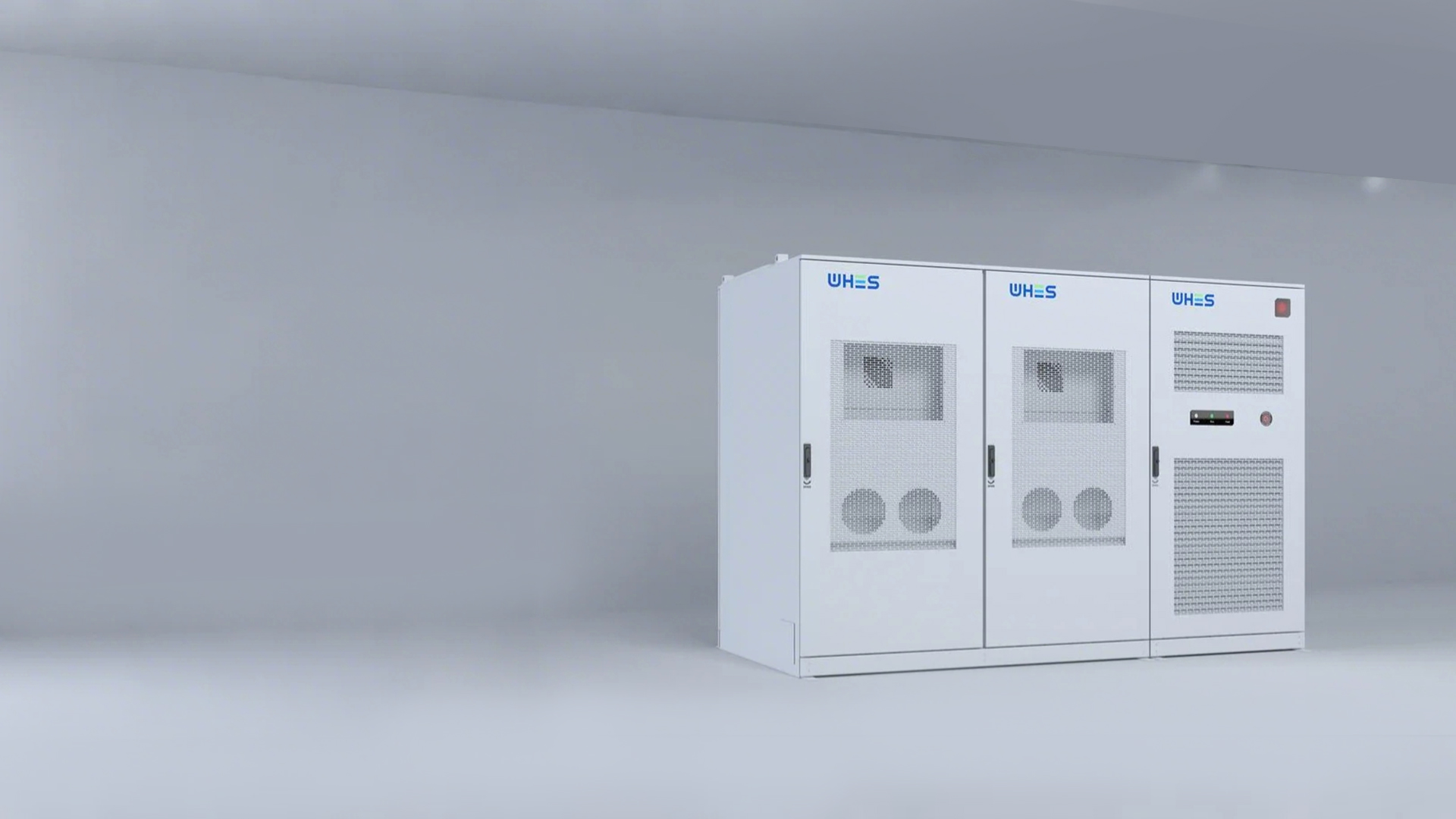
For systems where every watt matters, the thoughtful integration of efficient inverters, a well‑tuned BMS, and adaptive thermal control is not theoretical — it is operational survival. WHES offers architectures and field data that embody these principles, and so becomes a natural partner when the objective is resilient, high‑RTE energy storage. —