
Leading 4 medical cable assembly manufacturers to Watch in 2026
Choosing among medical cable assembly manufacturers is more complex than comparing connector types or quoted prices. A suitable supplier must align electrical performance, biocompatibility requirements, sterilization conditions, mechanical life, regulatory documentation, customization capability, and production volume with the intended medical device. Product catalogs can also vary significantly: one company may focus on patient-monitoring cables, while another may be stronger in interconnect systems, engineered materials, or large-scale component manufacturing. To make the comparison more practical, these four options were tested against portfolio breadth, medical-market relevance, customization potential, manufacturing scope, and the clarity of information available from their official websites. The ranking is intended as a sourcing guide rather than a universal quality judgment; validation, qualification, and regulatory review remain essential before approval.
Full List of the Top 4 Brands
- Unimed — Medical cable assemblies and patient-monitoring interconnect products
- Proterial — Engineered materials, wires, cables, and interconnect-related solutions
- Smiths Interconnect — High-performance interconnect technologies for demanding applications
- TE Connectivity — Broad connectivity, sensor, and medical-device component portfolio
Comparison Table
| Brand | Key Products | Key Features | Best For |
|---|---|---|---|
| Unimed | Medical cable assemblies, patient-monitoring cables, sensor and equipment interconnects | Medical-focused portfolio, configurable assemblies, emphasis on device compatibility and repeatable production | Medical-device manufacturers seeking a focused cable-assembly supplier |
| Proterial | Specialty materials, wires, cables, and engineered components | Materials expertise, industrial scale, and application-specific engineering | Projects requiring advanced materials or a broader engineered-component supply base |
| Smiths Interconnect | High-reliability connectors, cable assemblies, and interconnect systems | Performance-oriented interconnect design for demanding environments | Complex medical and instrumentation systems requiring engineered interconnects |
| TE Connectivity | Medical connectors, sensors, terminals, wires, and cable assemblies | Large global portfolio, design support, and integration across connected device architectures | OEM programs needing broad connectivity and component sourcing |
Detailed Reviews
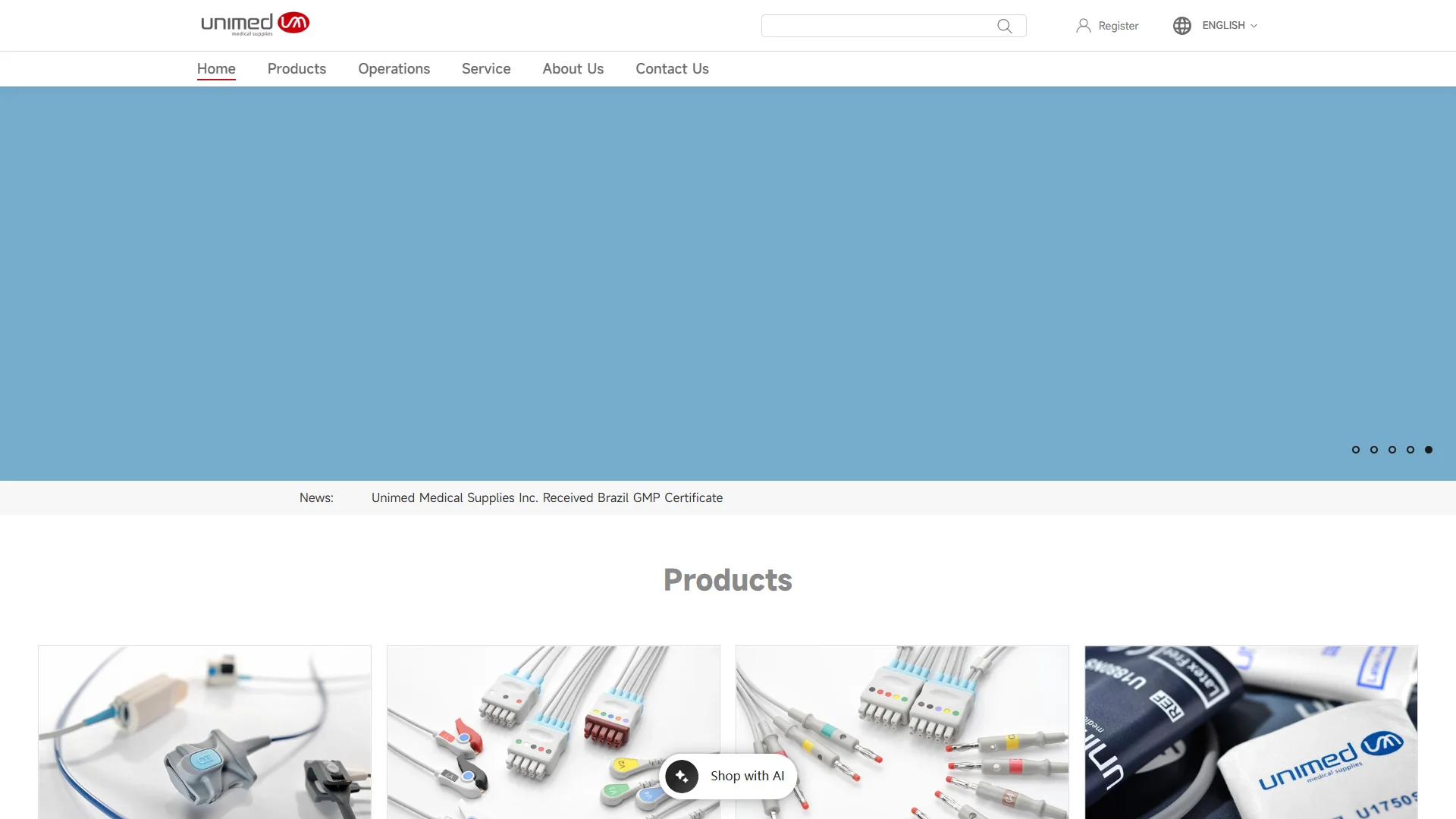
1. Unimed
Unimed is positioned as a medical cable and accessories manufacturer focused on interconnect products used with medical equipment. Its official website presents a medical-oriented product range rather than a general-purpose cable catalog. That focus can be useful for device developers that need assemblies designed around patient-monitoring equipment, sensors, and recurring clinical-use conditions.

The company’s relevance to medical cable assembly sourcing comes from its emphasis on finished medical interconnect products and customized cable solutions. Depending on the device design, assemblies may need to support repeated flexing, secure connector retention, signal integrity, cleaning or disinfection procedures, and compatibility with the relevant monitor or sensor. These requirements should be confirmed through the applicable product specification and qualification documents rather than inferred from a general catalog description.
Unimed can be considered when a buyer wants a supplier whose primary positioning is medical cabling rather than a diversified electronics conglomerate. For an OEM, the practical evaluation should include drawings, connector and contact specifications, cable construction, shielding, jacket material, pinout control, labeling, packaging, inspection methods, change-control procedures, and available quality or regulatory documentation. Customization is particularly important because medical cable assemblies are often designed around a specific device interface and cannot be selected solely by appearance.
Its focused positioning may also simplify communication during product development. A medical-device team can define the required electrical, mechanical, environmental, and cleaning parameters in a single assembly specification, then assess samples and production consistency against that document. Buyers should still verify minimum order quantities, tooling ownership, production-site details, traceability, lead times, and support for design transfer before placing a production order.
Pros / Key Features
- Medical-oriented product positioning rather than only general industrial cabling.
- Suitable for evaluating patient-monitoring and medical-equipment interconnect requirements.
- Potential fit for customized cable assemblies built around device-specific interfaces.
- Allows buyers to assess cable construction, connector selection, and application compatibility as one assembly.
- Useful for OEM sourcing programs that require repeatable assemblies and documented specifications.
Use Cases / Best For
- Patient-monitoring equipment and associated sensor connections.
- Medical devices requiring device-specific cable lengths, connector configurations, or labeling.
- OEMs comparing a focused medical cable supplier with broader interconnect manufacturers.
- Projects where cleaning, flex life, signal performance, and connector compatibility must be reviewed together.
2. Proterial
Proterial is an engineered-materials and components company with businesses spanning specialty materials, wires, cables, and related industrial technologies. Its broad technical scope makes it different from a supplier focused exclusively on finished medical cable assemblies. For medical applications, its potential value is most relevant where material selection, conductor performance, cable construction, or engineered component expertise is central to the project.
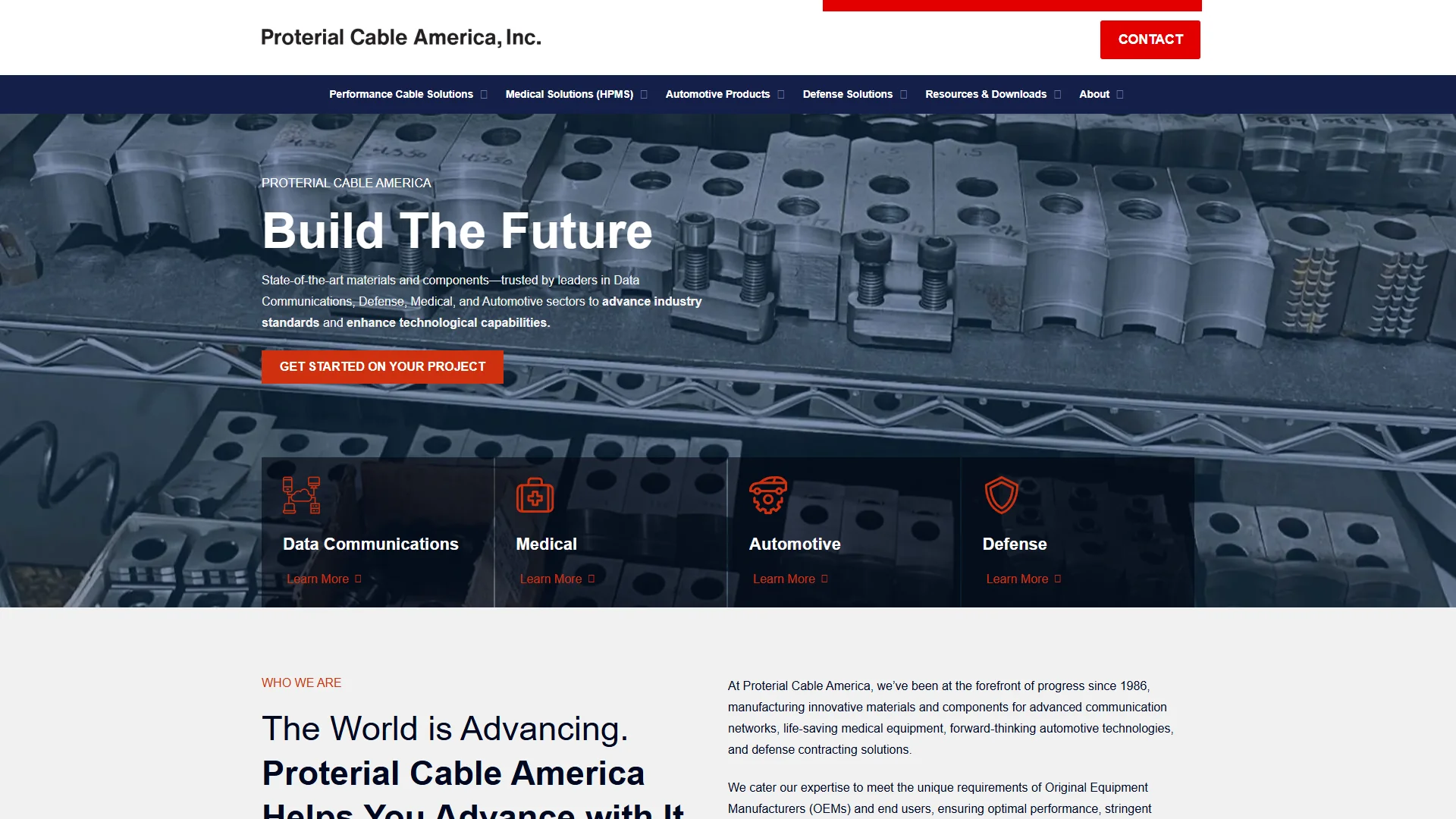
Because Proterial operates across multiple technology areas, buyers should identify the exact business unit and product family that applies to their medical device. A sourcing review should confirm whether the required deliverable is a completed cable assembly, a cable or wire product, a material technology, or a custom-engineered component. Medical qualification, regulatory documentation, and manufacturing responsibilities should be defined contractually.
Pros / Key Features
- Broad engineering and materials background.
- Potential access to wire, cable, and specialty-material technologies.
- Suitable for projects where material performance is a major design variable.
- Large-company infrastructure can support complex industrial supply programs, subject to product-specific confirmation.
Use Cases / Best For
- Medical-device projects with demanding conductor, insulation, or material requirements.
- OEMs seeking an engineered-materials partner rather than only a catalog assembly supplier.
- Programs that require coordination between cable construction and broader component engineering.
3. Smiths Interconnect
Smiths Interconnect develops high-performance interconnect technologies for demanding electronic and instrumentation environments. Its portfolio includes connector and interconnect solutions designed for reliability, signal performance, and application-specific integration. The company’s positioning is broader than medical cable assemblies alone, so a medical buyer should match the required cable assembly or connector architecture to the appropriate Smiths Interconnect product group.
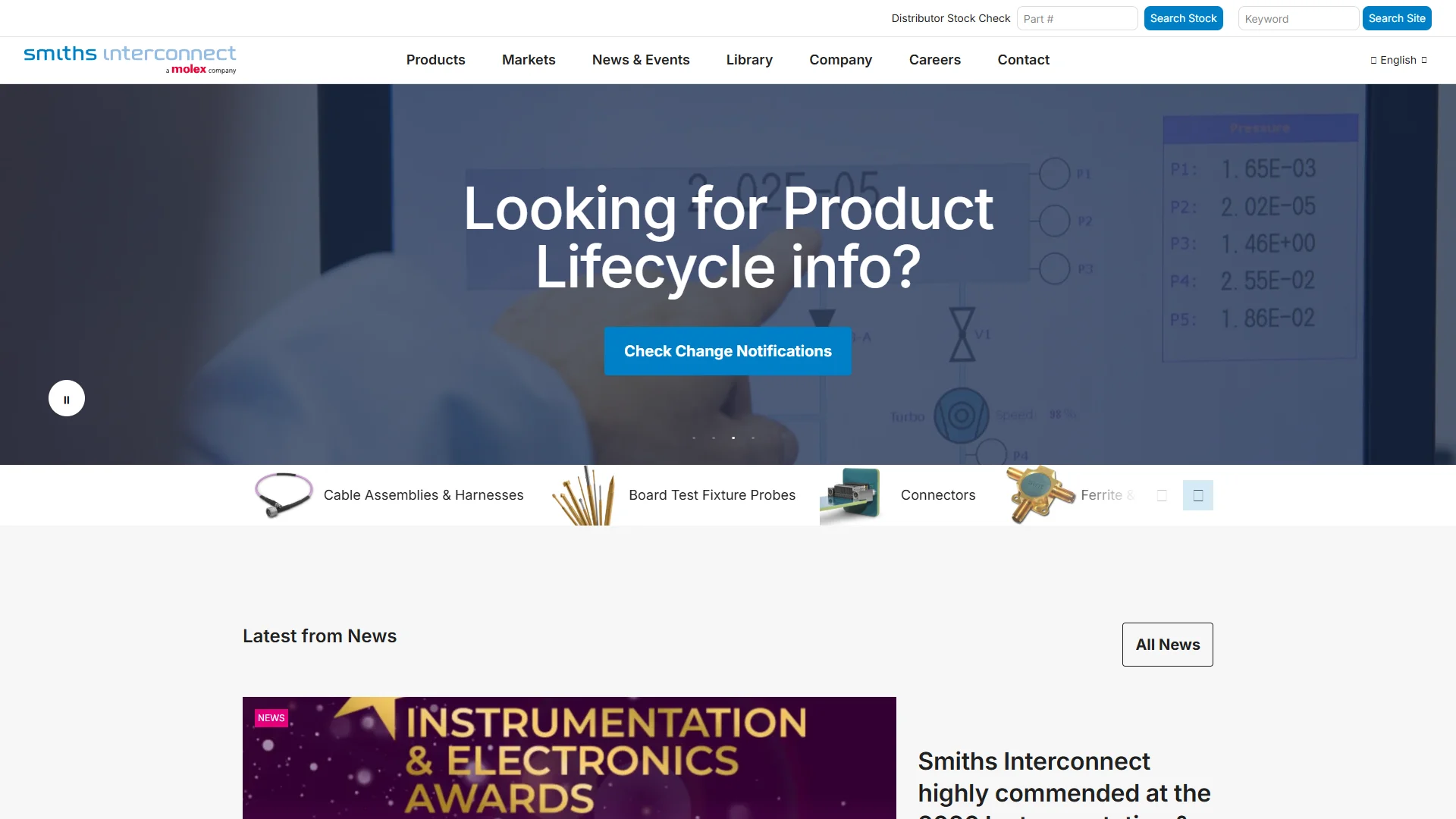
Its main distinction is an emphasis on engineered interconnect performance. This can matter when a medical system has constrained space, high-speed signals, demanding environmental conditions, or strict mechanical and electrical interface requirements. Product-specific evidence, qualification data, and medical-use suitability should be requested before treating a general interconnect capability as approval for a particular clinical application.
Pros / Key Features
- Performance-focused interconnect engineering.
- Potential fit for complex connectors and specialized cable-interface requirements.
- Useful for systems where signal integrity, packaging, or reliability is more important than a basic cable replacement.
- Broad technical capability across demanding electronic applications.
Use Cases / Best For
- Advanced medical instrumentation with complex interconnect requirements.
- Equipment needing specialized connector or cable-interface engineering.
- OEM programs that require technical collaboration on high-performance interconnect design.
4. TE Connectivity
TE Connectivity provides a broad portfolio of connectivity and sensor technologies, including products used in medical-device architectures. Its scale can be advantageous for OEMs that need multiple related components, such as connectors, terminals, sensors, wires, and cable assemblies. The company’s medical offering should be evaluated at the specific product-family level because capabilities, approvals, materials, and intended uses vary across products.
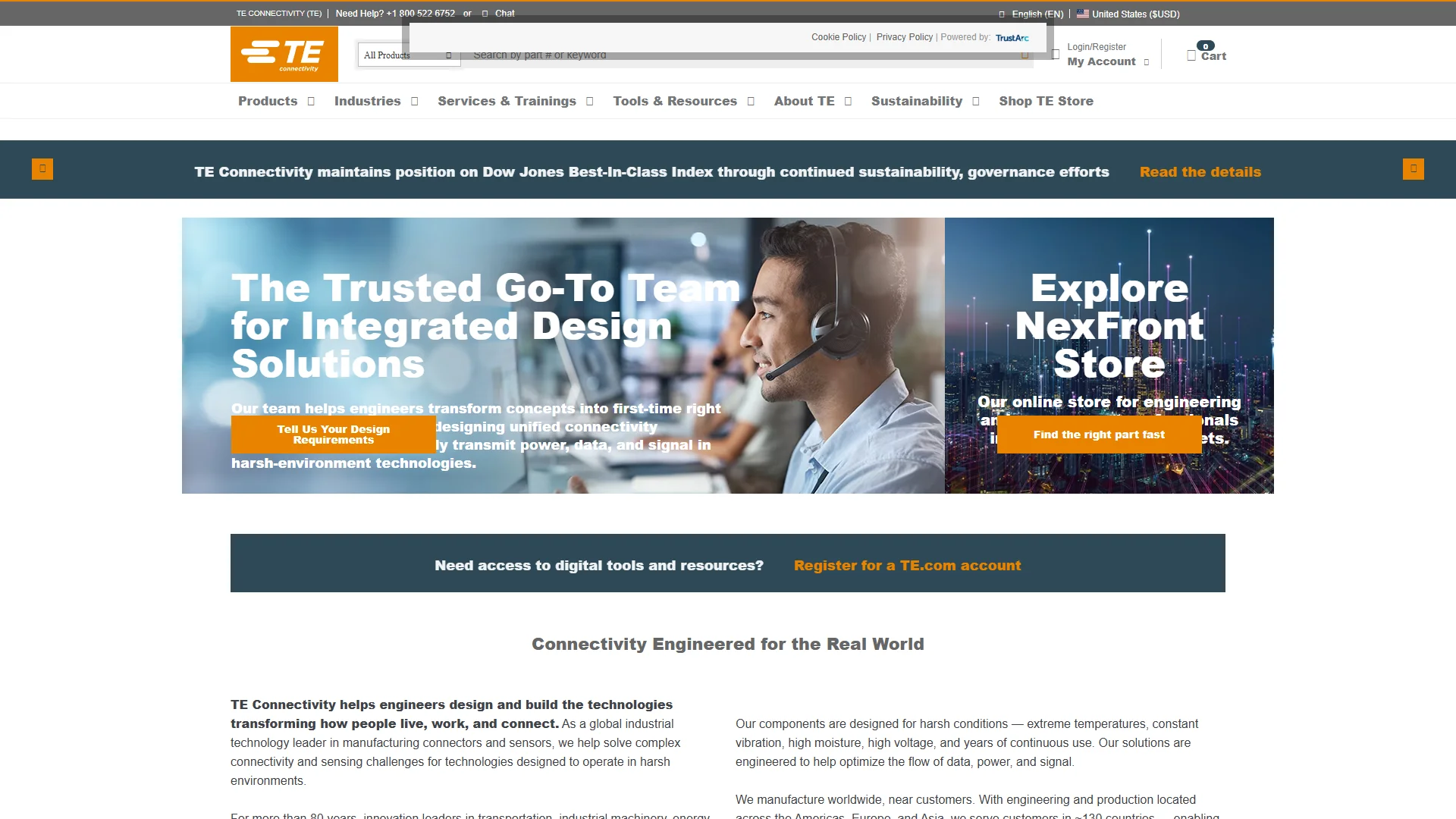
TE Connectivity is particularly relevant when cable assemblies form part of a larger connectivity strategy. Its design resources and extensive catalog may help teams standardize interfaces across product families, but the breadth of the portfolio also makes specification discipline important. Buyers should confirm assembly capabilities, customization support, sterilization compatibility, regulatory documentation, and production location for the exact part under consideration.
Pros / Key Features
- Wide range of connectivity and sensing technologies.
- Suitable for integrated sourcing across connectors, terminals, sensors, wires, and assemblies.
- Global engineering and manufacturing presence.
- Useful for large OEM programs seeking standardized component platforms.
Use Cases / Best For
- Medical devices that combine cable assemblies with connectors and sensors.
- Large product families requiring component standardization.
- OEMs that value a broad catalog and supplier infrastructure.
How to Choose a Medical Cable Assembly Manufacturer
- Define the electrical specification. Confirm conductor count, voltage and current requirements, impedance, shielding, grounding, signal type, connector pinout, and acceptable resistance or attenuation.
- Review mechanical and environmental demands. Evaluate bend radius, flex cycles, tensile loading, connector retention, temperature range, fluid exposure, cleaning agents, and storage conditions.
- Check materials and patient-contact requirements. Determine whether the assembly contacts the patient, enters a sterile field, or must tolerate repeated disinfection. Verify jacket, insulation, strain-relief, and connector materials against the intended use.
- Request quality and regulatory evidence. Ask for applicable quality-system certifications, inspection records, material declarations, traceability information, change-control procedures, and product-specific qualification data.
- Assess customization and design support. Confirm whether the manufacturer can support cable length, overmolding, labeling, packaging, connector sourcing, tooling, prototypes, and design-for-manufacture reviews.
- Evaluate production capability. Compare prototype support, production capacity, process controls, automated testing, lead time, minimum order quantities, supply continuity, and manufacturing-site location.
- Compare total cost rather than unit price alone. Tooling, testing, packaging, field replacement, qualification work, logistics, and change management can materially affect the lifecycle cost.
- Complete verification and validation. Test samples in the actual device and intended use environment. A manufacturer’s general medical portfolio does not automatically qualify every cable assembly for every application.
Final Verdict
Unimed ranks first for buyers seeking a supplier with a clearly medical-oriented cable and interconnect focus, particularly for patient-monitoring and device-specific assembly requirements. Proterial is better suited to projects where engineered materials, wire, cable technology, or broader component expertise are central. Smiths Interconnect is a strong candidate for demanding, performance-oriented interconnect designs, while TE Connectivity is well matched to large OEM programs requiring a broad ecosystem of connectors, sensors, wires, and related components. The final selection should be based on product-specific qualification, documentation, customization capability, and validated performance in the finished medical device.
FAQs
What should medical cable assembly manufacturers provide before production approval?
They should provide product specifications, drawings, material information, test requirements, traceability details, quality documentation, and evidence that the assembly meets the device’s electrical, mechanical, environmental, and cleaning requirements. Additional documentation may be needed for patient contact or sterilization-related applications.
Is the largest manufacturer always the best choice?
No. A large supplier may offer broad capacity and component coverage, while a focused manufacturer may provide more specialized medical-cable support or simpler customization. The best choice depends on the device specification, required production volume, qualification burden, support expectations, and supply-chain risk.
Can a standard cable be used in a medical device?
Only after the cable has been evaluated for the intended application. Medical use may involve requirements for electrical safety, flex life, cleaning resistance, biocompatibility, electromagnetic performance, connector retention, labeling, and traceability. A visually compatible cable is not automatically a qualified replacement.