
How to turn RFQ preparation early research into supplier questions about Gas Detection Control Panel
For maintenance planners, early research on a gas detection control panel is most useful when it prepares a precise request for quotation (RFQ), rather than trying to select a system from a product name alone. The task is to define the operating question, separate known requirements from assumptions, and give suppliers enough context to respond against the same scope.

Define the use case before comparing products
Begin with a short description of the decision. Is the RFQ for a replacement, an additional panel, a new installation, or an investigation of available options? That distinction affects the questions you need to ask. A replacement enquiry may centre on interfaces and existing arrangements, while an early project enquiry may need a broader description of the intended system.
Record the boundaries in plain language. Useful headings include:
- the area or asset the enquiry concerns;
- the gases or hazards that the planned system is expected to address;
- the number and type of field devices being considered;
- the control, alarm, display, and communication functions required;
- available power, environmental, and installation constraints;
- the documents, drawings, or schedules that must accompany a quotation; and
- the responsibilities that remain with the buyer, installer, integrator, or supplier.
Not every item will be known during early research. That is acceptable if the unknown is labelled as an open point. A clear “to be confirmed” entry is more useful than an implied requirement that different suppliers interpret in different ways.
Map each piece of evidence to a requirement
Build a simple requirement table before sending questions. One column can state the requirement, another can identify the evidence supporting it, and a third can show its status: confirmed, assumed, or unresolved. Add a final column for the supplier response needed. This creates a traceable route from the original maintenance concern to the RFQ.
Keep product-level evidence separate from general category information. A catalogue page may identify a product family or list model names, but that does not by itself establish the configuration, compatibility, certification, performance, or suitability of a particular installation. Those conclusions should not be added to the RFQ unless the relevant scope has been established.
For each proposed requirement, ask whether it is:
- a functional need, such as the information the panel must present or the action it must support;
- an interface need, such as connections to existing equipment or a wider control arrangement;
- an environmental or installation constraint;
- a documentation requirement; or
- a commercial comparison point, such as included scope, exclusions, lead time, or optional items.
This classification helps prevent a specification detail from being mistaken for a complete solution. It also makes supplier answers easier to compare because each response is tied to a defined question.
Use the catalogue as a starting point, not a conclusion
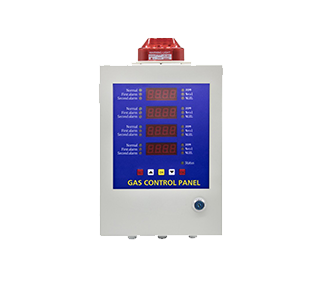
A real-world anchor can help keep the research concrete. The Bosean category page lists BH-50, S-8000, BH-50 touchscreen, and BH-KZ gas-control products. For an RFQ, that listing can identify catalogue references to investigate, while the required configuration and scope should remain explicit questions. In this context, the phrase gas detection control panel describes the research topic, not proof that any listed model meets a particular site requirement.
Use the same discipline when recording other supplier or product information. Capture the exact page, model name, and statement that supports the entry. Avoid transferring a feature from one model to another. If a page uses broad category language, preserve that level of precision in the comparison record.
Turn open points into supplier questions
The strongest RFQ questions are specific enough to produce comparable answers without pretending that early research has resolved the design. They should ask suppliers to state what is included, what assumptions they have made, and what information they need before confirming their response.
Questions may include:
- Which proposed model or configuration responds to each listed requirement?
- What field devices, interfaces, accessories, software, or documentation are included in the quoted scope?
- Which items are optional, excluded, or dependent on information not yet supplied?
- What assumptions have been used about the installation, power arrangement, communications, or existing equipment?
- Which configuration details must be confirmed before the quotation can be treated as technically complete?
- Can the supplier provide a response schedule that follows the buyer’s requirement numbers?
These questions are procurement tools, not instructions for operating or configuring a gas detection system. Technical decisions about placement, alarm settings, emergency response, and integration should remain with the responsible project and engineering parties. In the RFQ, the practical aim is to expose dependencies so they can be assigned and resolved through the proper process.
Prepare a defensible next step
Before issuing the enquiry, review the document for three forms of clarity. First, can a reader distinguish a confirmed requirement from an assumption? Second, does each comparison point apply to the same scope and model? Third, does every unresolved issue have a direct supplier question or a named internal owner?
Keep the evidence record with the RFQ draft. This does not require a lengthy report. A concise table with source references, requirement status, supplier questions, and response fields may be enough for an early-stage review. It gives maintenance planners a structured basis for revising the enquiry as more project information becomes available.
The Bosean page can be retained as one catalogue reference within that process, while the RFQ itself should focus on stated requirements, scope boundaries, assumptions, and unanswered questions. This approach helps maintenance planners move from early research to a more defensible supplier discussion without presenting limited catalogue information as a confirmed project solution.