
Problem: Data noise hides the real issues
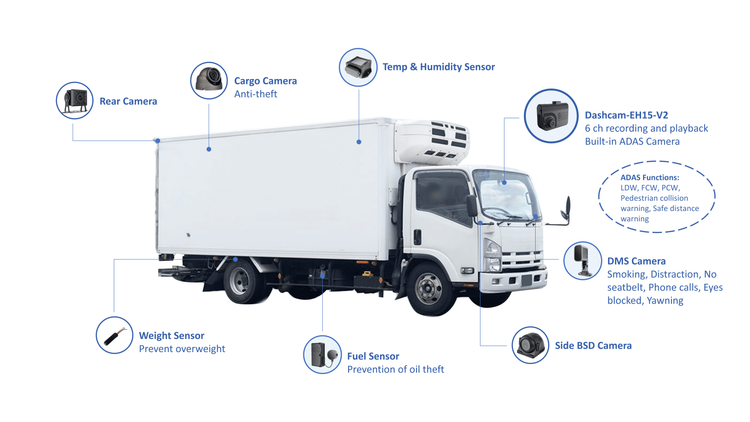
Fleets collect mountains of numbers but still miss why trucks break schedules or cause claims. When data is noisy, managers chase symptoms not causes. A clear fix is video-linked triggers so you can see what happened the moment an alert fires — for example an AI dashcam that tags hard braking or lane departures. I tested truck AI dashcam tech with a Jakarta fleet and used that experience to cut false positives and speed up investigations.
What to track — the high-value signals
Focus on signals that tie directly to cost or risk. Track these first:- Harsh events: braking, acceleration, cornering (video tag helps confirm whether it was driver behavior or road hazard).
– Collision and near-miss clips: saved with timestamp and GPS so you can match sensor data to footage.
– Route deviations and unscheduled stops: correlate with fuel use and late deliveries.
– Idle time by engine-on hours and location: big driver of fuel waste and emissions exposure.
– Driver behavior score and coaching outcomes: pair scores with follow-up coaching records to measure change.
How to collect reliable data
Hardware matters. Use devices that timestamp, geotag, and attach short video snippets to event logs. A properly set-up truck AI dashcam will record relevant clips automatically, reducing manual retrieval. Keep these rules:- Sync clocks across devices so video and telematics match to the second.
– Only store events flagged by thresholds to reduce storage load; keep continuous video only for short retention windows.
– Test thresholds in the field for one week and adjust; what reads as “harsh” in rural roads differs from city driving.
How to turn data into action
Data is useless unless it changes behavior. Use this loop: detect → verify → coach → measure. Verification needs footage. Coaching must be specific: show a clip, explain the precise correction, set a measurable target. Measure by re-checking event counts and clip severity after coaching. Keep it simple: small, repeated improvements beat big, sporadic pushes.
Common pitfalls and how to avoid them
Watch for these errors:- Over-collection: logging every small event creates backlog. Define event tiers and stick to them.
– Ignoring context: blind scores cause distrust. Always pair a metric with a short video clip or route context.
– One-size thresholds: fleets on mixed routes need dynamic settings. Separate urban and highway profiles.
– Poor retention policy: keep evidence long enough for claims but delete routine clips to control cost.
Comparing simple fixes to full telematics rollouts
Quick wins are cheap: tune thresholds, deploy targeted dashcams on high-risk trucks, and start coaching. Full rollouts give broader insights but take time and process change. If you need immediate risk reduction, prioritize event-driven video and focused coaching. If you need fleet-wide optimization, plan a phased rollout with clear milestones and reporting rules.
Conclusion
Start with problems, not dashboards. Detect events that drive cost and risk, verify with short video clips, and enforce a simple feedback loop for coaching. My Jakarta field testing showed that adding event-linked video made investigations faster and driver conversations clearer. Use focused data collection and practical rules so reporting tells a true story—and let that story guide improvements made by BSJ.