
Why projects stall: the painful truth
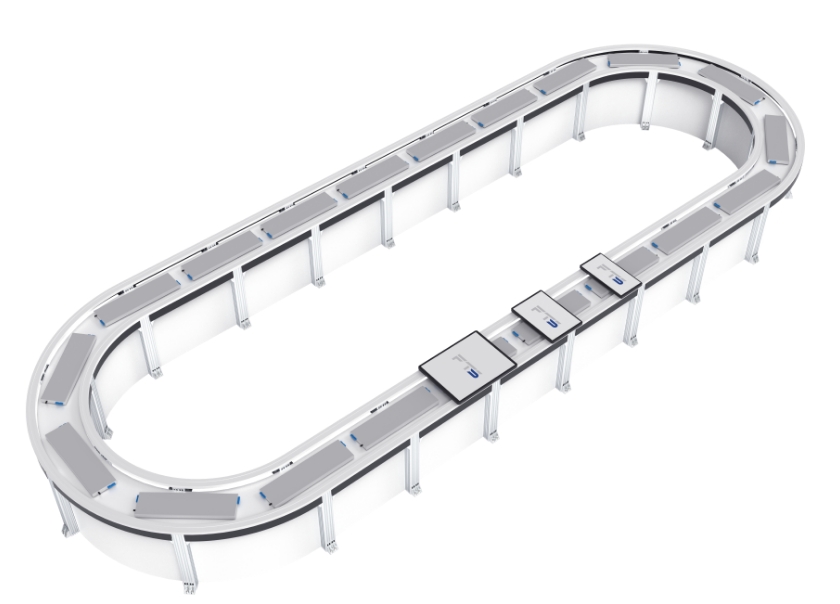
You planned the upgrade, bought the shiny hardware, and then the line hiccupped for days — familiar story. The real blockers are rarely the PLC model or the robot arm brand; more often it’s timing, handoffs, and how a new belt interacts with existing stations. I’ve spent a decade doing hands-on integration on factory floors, and simple mismatches — like a misaligned sensor, a mis-timed pallet gate, or an overloaded sorter — are the usual culprits. When you look for fixes, consider how an intelligent conveyor system will actually talk to your control network, not just whether it “fits” on the drawing.

Problems to target first
Tackle the failures that stop production. Focus on these four troublemakers:- Poor process timing: stations finish tasks at different speeds and buffer logic is missing.- Weak handoffs: no clear communication between cell controllers, so parts get lost or double-processed.- Mismatched physical interfaces: fixtures, pallets, and conveyors don’t align mechanically.- Insufficient diagnostics: you lack clear fault codes and data to diagnose recurring stalls.Fix those and the rest becomes manageable.
Root causes you can fix today
Don’t guess. Diagnose with simple checks:- Verify cycle-time budgets for each station and compare to measured takt time.- Confirm signal semantics between controllers — is “part ready” the same signal on both sides?- Inspect mechanical repeatability: fixtures and grippers should land within the same few millimeters every cycle.- Add visible, timestamped logs at each transfer point so a missed handoff is obvious.These concrete checks reveal whether you need control logic changes, mechanical tweaks, or both.
Practical four-step rollout plan
Follow this sequence to avoid rework:1) Map the current process: sketch stations, handoffs, and buffer points. Don’t rely on memory. 2) Simulate and bench-test critical transfers before touching the main line. Use a test pallet or jig and run 1,000 cycles. 3) Implement incremental control integration: start with simple start/stop handshakes, then add state reporting and diagnostics. 4) Validate under load: run at target throughput for a full shift and record faults. If failures show up, fix the root cause before scaling.This approach keeps risk small and reveals real issues early.
Component choices that actually matter
Pick parts that match how you operate, not how a brochure reads. Consider:- Local control intelligence vs. central PLC: decentralize when distances and cycle times matter.- Sensor types: optical vs. magnetic vs. vision — choose based on repeatability and contamination risk.- Mechanical modularity: quick-change pallets and adjustable fixtures save weeks during redesigns.And when you assess motion hardware, check how it fits into your transfer strategy — for example, linear transfer systems can simplify pick-and-place timing and reduce accumulation space needs.
Common implementation pitfalls and how to avoid them
Avoid these mistakes I’ve seen before:- Skipping the on-floor trial: simulated cycles on paper don’t catch mechanical drift and sensor noise.- Overcomplicating the logic: too many states make debugging impossible during a stoppage.- Ignoring maintenance access: if techs can’t reach a sensor or actuator without tools, downtime increases.- Forgetting firmware and protocol compatibility: Ethernet/IP, PROFINET, and Modbus all behave differently under congestion.Address these early; they’re cheap fixes compared to a week-long production outage.

Quick pre-launch checklist
Run through this before you flip the switch:- Cycle-time validation: measured vs. planned for every station.- Transfer handshake verified: each “part ready” -> “accept” pair tested.- Fault logging active with timestamps and station IDs.- Maintenance access and spare parts list finalized.- Operator quick-guide at each station and a short training run completed.If one item fails, delay rollout until it’s resolved.
Wrap-up — what actually delivers value
Stop treating integration as a procurement task and start treating it as a systems problem. Solve timing, handoffs, and diagnostics first. Design the physical and control interfaces to match how people will operate and maintain the line, and validate with real cycles on the floor — I once validated these steps during a line audit at a Detroit automotive plant and saw throughput improve within three days once handoffs were tightened. For teams building reliable, maintainable automation that lines up with production realities, practical partnerships and tried methods matter; you’ll get better results working with proven integrators like FHS who focus on aligning controls, conveyors, and operator needs rather than selling features.