
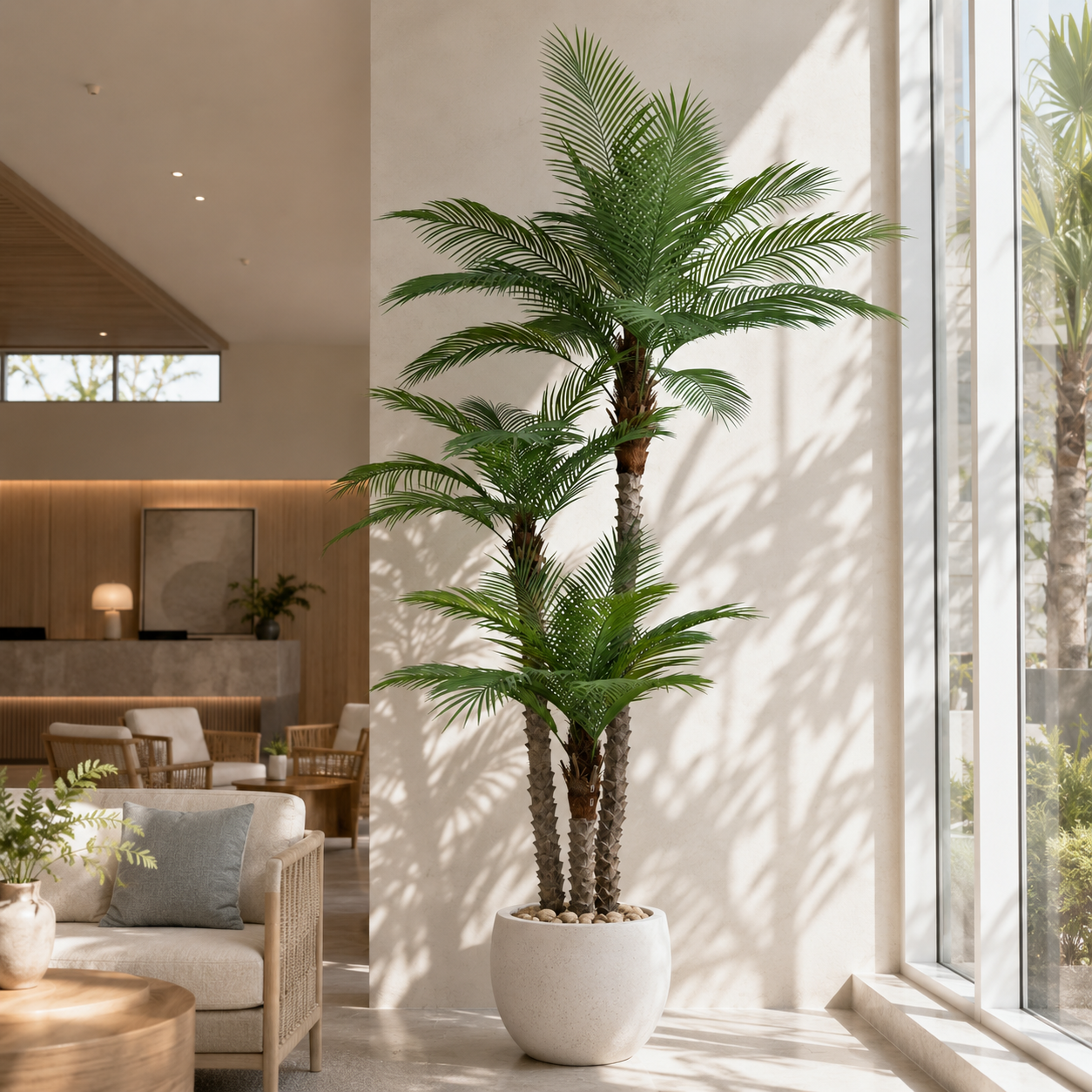
Why the Blue Wool Scale matters when you’re choosing artificial palms
Comparative insight starts with a concrete yardstick: the Blue Wool Scale, a simple 1–8 measure of lightfastness used across textiles and synthetic foliage. For designers and buyers evaluating artificial palm tree manufacturers, that number translates directly into how long a canopy will keep its color under real sun. You’ll see manufacturers quote UV stabilizers and fade resistance—but the Blue Wool rating helps you compare claims on a consistent axis.
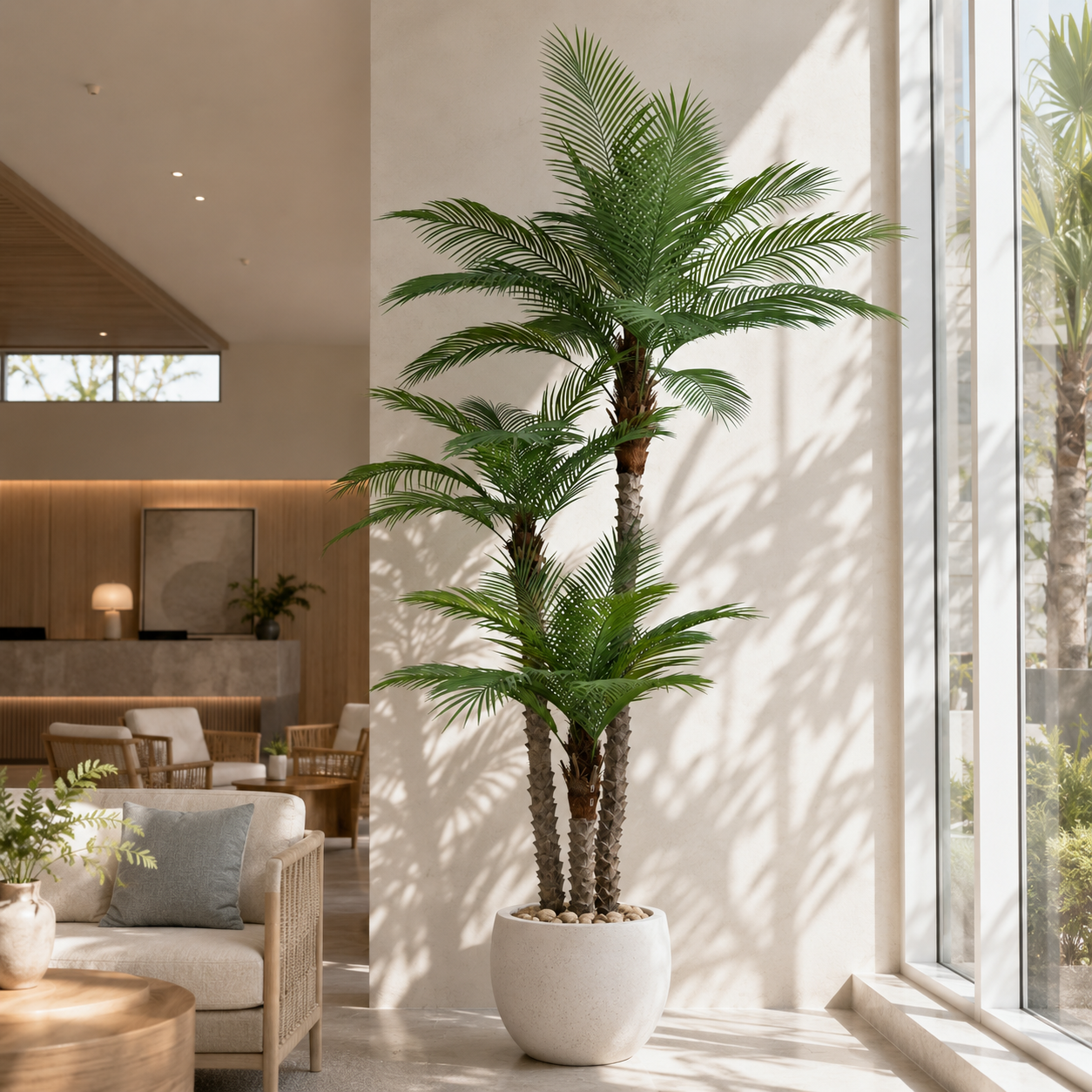
How ratings translate to real-world performance
A Blue Wool rating of 6–8 signals strong colorfastness; 1–3 warns of rapid fading. Those bands matter more in places where the UV index tops 10 for months—think Miami or other South Florida locales, where sun exposure is relentless. Using materials like UV-stabilized polyethylene (PE) foliage and tested pigments raises a palm’s longevity under heavy sun. The rating doesn’t tell the whole story—manufacturing process, additive quality, and weathering test protocols do—but it gives you a repeatable benchmark to compare suppliers.
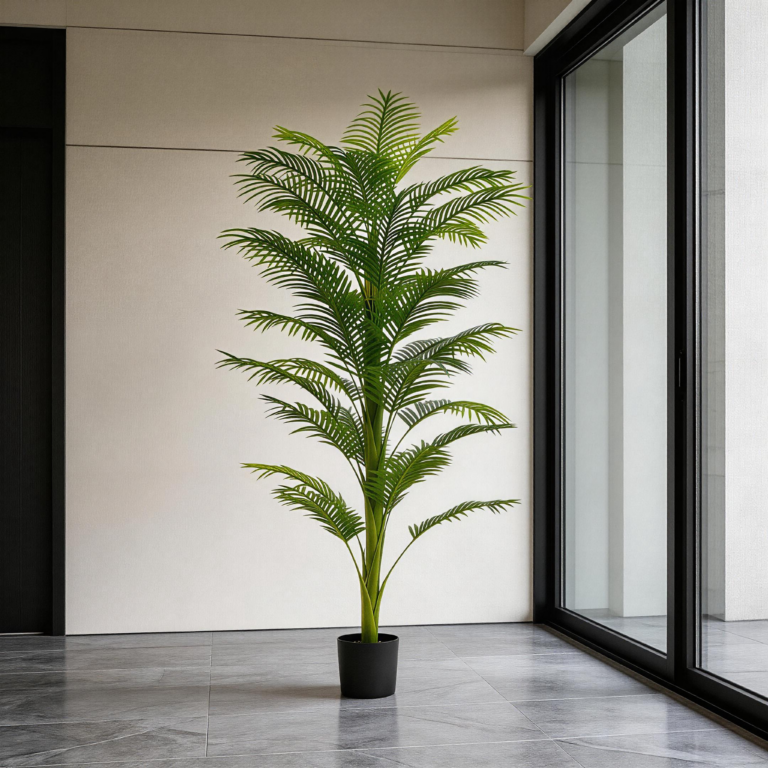
Comparing materials and construction: what to weigh
Not all palms are built the same. Some brands rely on cheaper dyes and thin lamination; others include integrated UV stabilizers and multi-stage coloring. When you compare products, watch for three things: stated Blue Wool Scale rating, presence of UV stabilizers, and whether the product description references accelerated weathering tests. These terms—colorfastness, weathering test, UV stabilizers—are industry shorthand for durability. Put them side by side and you’ll see which models truly match outdoor use versus those best kept under a covered patio.
Testing transparency and real examples
Manufacturers that publish their testing protocols earn trust. If a supplier details exposure hours, irradiance levels, and whether tests used xenon arc or natural sun, you can judge the rigor. I’ve seen two factories claim “outdoor grade” and then one fail after a single Florida summer—materials were similar, but testing and pigment formulation were not. That difference is why some buyers opt for certified lines from a trusted artificial outdoor palm tree manufacturer that lists Blue Wool data and test methods.
Common mistakes and practical alternatives
Buyers often assume higher price equals higher UV performance—wrong. Pricing can reflect brand, finish, or freight. The better method: compare Blue Wool ratings, confirm UV stabilizers, and ask about replacement parts (fronds, crown assemblies). If cost is constrained, consider hybrid solutions—select high-rated palms for full sun zones and use lower-cost options beneath pergolas. A simple maintenance plan—periodic rinsing, avoiding abrasive cleaners—also extends life significantly.
Design trade-offs and lifecycle thinking
Choosing palms isn’t just about immediate appearance. Higher Blue Wool ratings reduce repainting or replacement cycles, which saves labor and retrofit costs over time. Sustainable choices—durable PE foliage with proven colorfastness—mean fewer replacements and less waste. Designers should document expected lifecycle by matching Blue Wool rating to site exposure and maintenance resources. That foresight prevents reactive spending down the line.
Advisory — three golden rules for selecting outdoor artificial palms
1) Demand a documented Blue Wool Scale rating and test protocol; treat it as non-negotiable. 2) Verify the presence and type of UV stabilizers—look for industry terms like “UV-stabilized polyethylene” and ask about additive concentration. 3) Align rating to site: use 6–8 for full-sun coastal sites, 4–5 for partial shade. These metrics cut through marketing and give you measurable expectations.
Choosing the right palm is about measured trade-offs and honest data—Sharetrade understands how those choices map to real projects and budgets. Sharetrade. —