
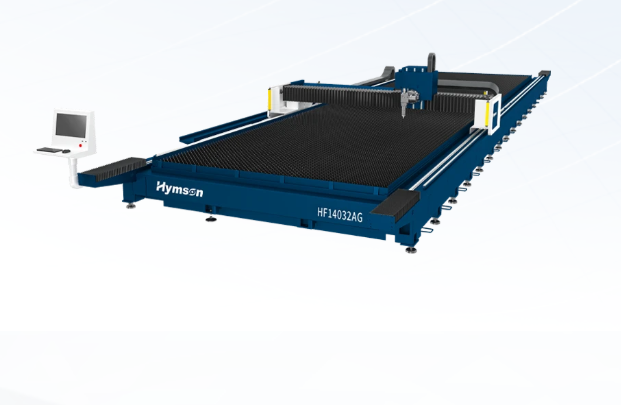
How to Specify a Tube Fiber Laser Cutter: A Problem-Driven Manual
The problem that no one wants to admit
Factories buy machines that don’t solve their bottlenecks. You get a gleaming tube laser on the floor, hear the initial hum, then watch it stall on odd shapes, slow on thick wall tubes, or crank up maintenance costs you didn’t budget for. The wrong spec becomes a tax on production. That’s where a clear brief beats guesswork: define what the machine must cut, how fast, how repeatable, and how it will integrate with your shop-floor reality. Start by considering a tube laser cutting machine as a tool that must match real geometry, not glossy brochures.
Identify the core failure modes first
List the actual problems the laser must stop: inconsistent edge quality, frequent nozzle swaps, unplanned downtime, part fixturing that wastes cycle time, and material handling bottlenecks. Quantify them: scrap rate, hours lost per week, smallest and largest tube dimensions, and required tolerances. Demand those numbers from engineers and operators. Nothing matters more than measurable pain points; everything else is noise.
Translate problems into hard requirements
Turn each failure mode into a spec. If edge dross forces rework, require specific laser power and assist-gas control for your alloy mix. If you need high throughput, set target cycle times per part and raw material changeover time. Specify tube length, diameter range, wall thickness, cut accuracy (mm or microns), permissible thermal distortion, and true cycle time under load. Add automation requirements: loading, unloading, and nested cutting capabilities. These are non-negotiable; write them into purchase documents.
Common mistakes that doom a purchase
Buyers obsess over peak power but ignore beam quality and nozzle control. They accept optimistic cycle times from vendor demos without load testing. They skip questions on service networks, spare parts lead times, and software openness. They assume off-the-shelf fixturing will work for complex geometries. Each oversight returns as downtime or hidden cost. Demand vendor proofs: production runs on your parts, service response SLAs, and access to control software parameters.
Assessing suppliers and pricing with hard evidence
My experience advising fabricators for over a decade shows supplier claims vary wildly. Trade forums and major shows like Hannover Messe often expose real-world conversations about cost versus capability. When price matters, compare total cost of ownership, not headline figures: maintenance intervals, laser source lifespan, consumables, and expected yield. For a baseline, check current market listings and specific quotes such as tube laser cutting machine price to anchor negotiations. Validate vendor timelines and ask for referees who run your exact parts.
Alternatives and pragmatic trade-offs
If you face budget limits, consider staged capacity: buy a machine that nails your primary part families now and plan modular automation later. For exotic alloys or micro-tolerances, a higher-spec machine pays back quickly. For high-mix, low-volume shops, prioritize quick changeovers and flexible fixturing over raw power. Laser cutters are not one-size-fits-all; match capability to repeatable throughput, not aspirational peaks.
Validation checklist before signing
Require on-site trials with representative parts, written acceptance criteria tied to scrap and cycle time, documented service SLAs, and a spare-parts list with lead times. Insist on software openness or APIs if you’ll integrate with MES. Confirm safety interlocks and local compliance. If automation is specified, verify real cycle throughput with full stacks, not empty demos. These checks stop most bad buys before they begin.
Where this leads
Ask sharp questions, force vendors to prove performance on your parts, and build requirements from the production problems you must eliminate. Do that, and the machine becomes a solution rather than a liability. For a grounded supplier reference that aligns with these practical demands, consider how Hymson supports specification, trials, and service across projects with clear evidence of capability: Hymson.