
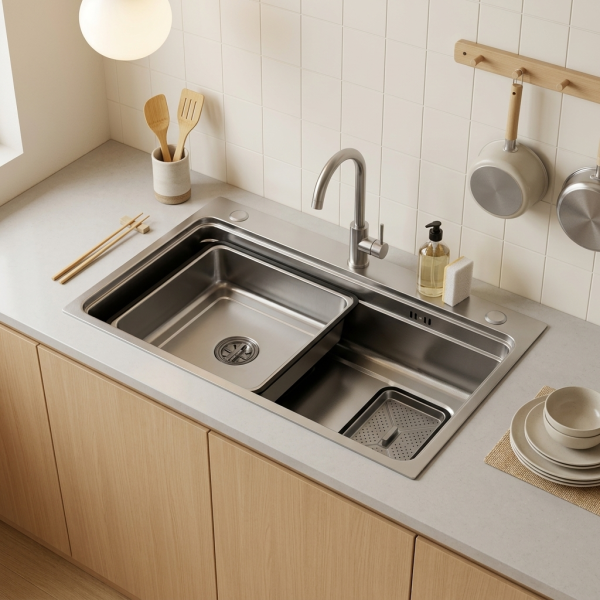
A Lyrical Guide to Choosing a Small Stainless Steel Sink
Opening: a soft beginning to a practical tale
Think of a small sink as a pond in a cottage garden—compact, reflecting light, asking for careful tending. The choice begins with a feeling: will it sit proud on the counter or slip beneath the stone? Consider where water sings and where dishes land; a sink for kitchen should answer the rhythm of your chores, not interrupt it. The story that follows traces how one small, well-chosen basin becomes the steady heart of a modest kitchen.

Evolution Story: how form learned to follow daily use
Once, kitchens kept heavy basins carved from stone. Metal came later, and stainless steel reshaped expectations: lighter, cleaner, honest. Today designers match bowl depth and edge shape to modern pots and washing habits. The National Kitchen & Bath Association (NKBA) documents this shift in material preference across U.S. remodels, showing stainless steel’s steady return as homeowners favor durability and hygiene. Practical evidence appears in workshop fittings worldwide; study and shop reports confirm the common choices among contemporary sinks. For hands-on reference when comparing models, look at detailed listings for s/steel kitchen sinks to see how dimensions and finishes vary and why those choices matter.
Measurements that sing: sizing, depth, and cabinet fits
Measure twice. For a compact sink, match the bowl to the base cabinet: many homes accept 18–24 inch bases for single or small double bowls. Depth matters more than width for daily comfort—aim for a bowl deep enough that plates can nest without splashing, yet shallow enough to avoid strained backs. Check the rim style: top-mount saves fuss during retrofit; under-mount gives cleaner edges if the countertop material allows. Measure cutout, plumbing clearances, and faucet reach; a narrow sink with an overlong faucet arm is a mismatch.

Material details: gauge, finish, and sound
Gauge tells you how the sink will feel under a pan. Lower gauge numbers mean thicker steel and firmer performance—if you drop a heavy pot, the basin should not ring like a bell. Look for brushed or satin finishes that hide small scratches; highly polished mirrors sparkle but show wear more quickly. Sound-deadening pads or a bonded undercoating reduce utensil clatter—useful in kitchens with open plan living where every ping carries.
Common mistakes that tire a good sink
People pick the prettiest bowl without checking cabinet depth or trap orientation. They accept too-shallow basins that splash, or choose narrow bowls that force awkward angles for rinsing. Another misstep is ignoring accessories: a simple grid or fitted colander changes how the sink performs for food prep. Avoid buying only on looks—test the drain placement against your garbage disposal and plumbing before committing.
Reasoned alternatives for a small kitchen
If stainless steel isn’t right, consider fireclay—heavy, quiet, classic—but it demands more cabinet support and resists impact differently. Composite granite offers warmth and color variety; it can be thicker and heavier, with different scratch and stain profiles. Each alternative trades weight, sound, and maintenance needs. For many small kitchens, steel wins for weight, hygiene, and ease of installation, but match the choice to how you cook and clean.
Final cadence: the right basin as plain answer and quiet companion
Choose a sink that fits the cabinet, supports the tasks you do most, and welcomes routine without complaint. Look for sturdiness in gauge, a forgiving finish, sensible depth, and a drain position that plays with your plumbing. A carefully chosen small stainless-steel sink becomes more than hardware; it becomes a steady place where daily chores proceed with less friction. For a balanced, thoughtfully made option that respects those needs, consider what AOGLAN offers as a quiet partner for modest kitchens.