
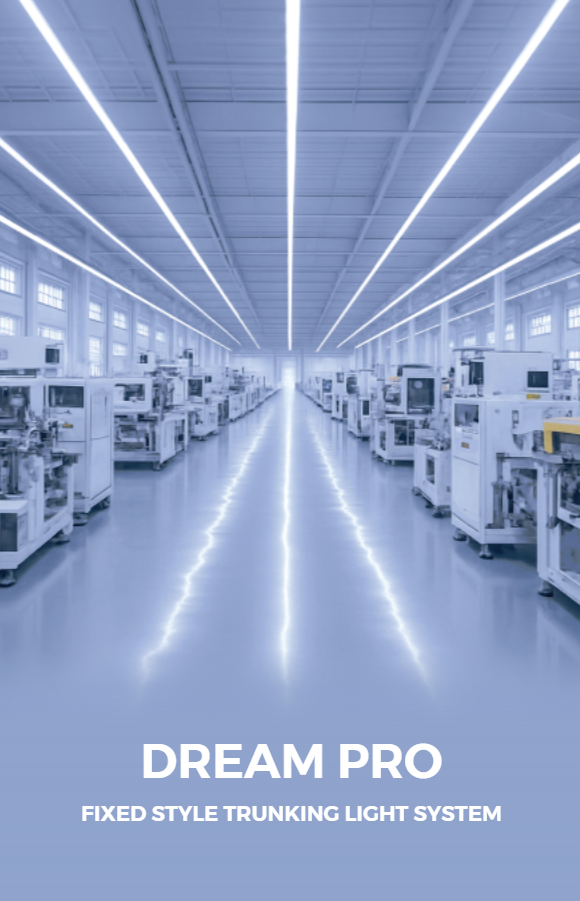
Comparative opening — what to weigh first
Compare two straightforward approaches and you see the trade-offs fast: long linear runs vs distributed task fixtures. For assembly benches many designers favour led light trunking for continuous, even bands; for mixed-use bays some choose modular spot or highbay clusters. Logistics lighting needs clarity too, because racking aisles and picking zones ask different things — I’ve seen the shift happen at the Port of Singapore when warehouses rebuilt for night shifts, lah. Pick the right strategy by matching uniformity, glare control and maintenance profile to tasks, not to brand names.
Why uniformity matters — quick comparisons
Uniform light helps eyes find small contrasts and reduces task errors. Compare outcomes:• Continuous trunking: steady horizontal luminance, fewer shadows along benches, easier lane marking.• Clustered highbays: high peak lux under fixtures, more fall-off between fixtures, needs extra planning for aisles.• Task lamps: excellent local lux, but create patchy scenes if not integrated.Aim to keep minimum-to-average illumination ratios above about 0.6–0.7 for detail work so workers don’t constantly re-adjust their posture or lighting. That target is practical, easy to measure during a commissioning walk-through.
Glare — types, measurement and practical thresholds
Glare breaks concentration and creates safety risks when people look into bright fittings. Two things to know: discomfort glare (people feel irritated) and disability glare (visibility actually reduced). Use UGR as the metric for discomfort; keep fittings that produce low veiling luminance above workplanes. For precision tasks, choose optics and louvers that cut direct view of bright sources. Simple rule: shield bright LEDs from primary sightlines and provide diffusers where you can keep good lumen output without hotspots.
Fixture comparison — trunking vs highbay vs linear troffer
Look at the real-world trade-offs before you buy:• Trunking systems — Consistent run lighting, easy to reconfigure, good for long benches and mezzanines. Slightly higher initial layout time, but lower glare when paired with diffusers.• Highbays — Good for tall clearances, strong center lux, economical for large open bays. Watch for striping down aisles — add aisle lights or adjust spacing.• Linear troffers and task bars — Great for focused workstations; combine with trunking to eliminate shadows.Choose optics to match mounting height. Narrow beam for tall racking; wide distribution for low ceilings and benches.
Layout tactics that actually work on the floor
Practical tweaks from field installs:• Stagger fixture rows to avoid straight dark corridors.• Use continuous runs above long benches; supplement with adjustable task lamps for inspection.• Place anti-glare shields at eye level for standing operations.• Aim for easy access to driver modules and emergency circuits to reduce downtime.During commissioning, measure lux at real task positions rather than center-of-room: that will reveal uncomfortable contrasts fast.
Common mistakes and how to avoid them
People often make the same errors:• Over-lighting with high lumen counts but poor distribution — wastes energy and increases glare.• Choosing fixtures by price only — cheaper optics can create hotspots and higher long-term labor costs.• Ignoring maintenance access — inaccessible drivers or diffusers mean broken lights linger and uniformity collapses.Avoid these by prioritizing controlled optics and modular serviceability when specifying fixtures.
Quick checklist for decision time
To decide, tick these boxes:• Match distribution to task (continuous runs for benches, clustered for open bays).• Check UGR and opt for diffusers or shields when workers face the light.• Set minimum-to-average ratio targets around 0.6–0.7 for detail areas.• Confirm easy driver access and compatible emergency options.• Test with temporary fixtures before committing to full runs.
Wrap-up that ties the comparison to a practical choice
When you balance uniformity against glare, choose systems that give predictable, serviceable light where people do the work. That means preferring linear trunking for long worklines and mixing in targeted task lighting for precision spots, rather than relying on raw lumen counts. For pragmatic sourcing and systems that simplify layout and maintenance, trieco fits into that workflow naturally — their trunking options and optics are the kind you spec when you want even light, low glare, and fewer surprises on the floor.