
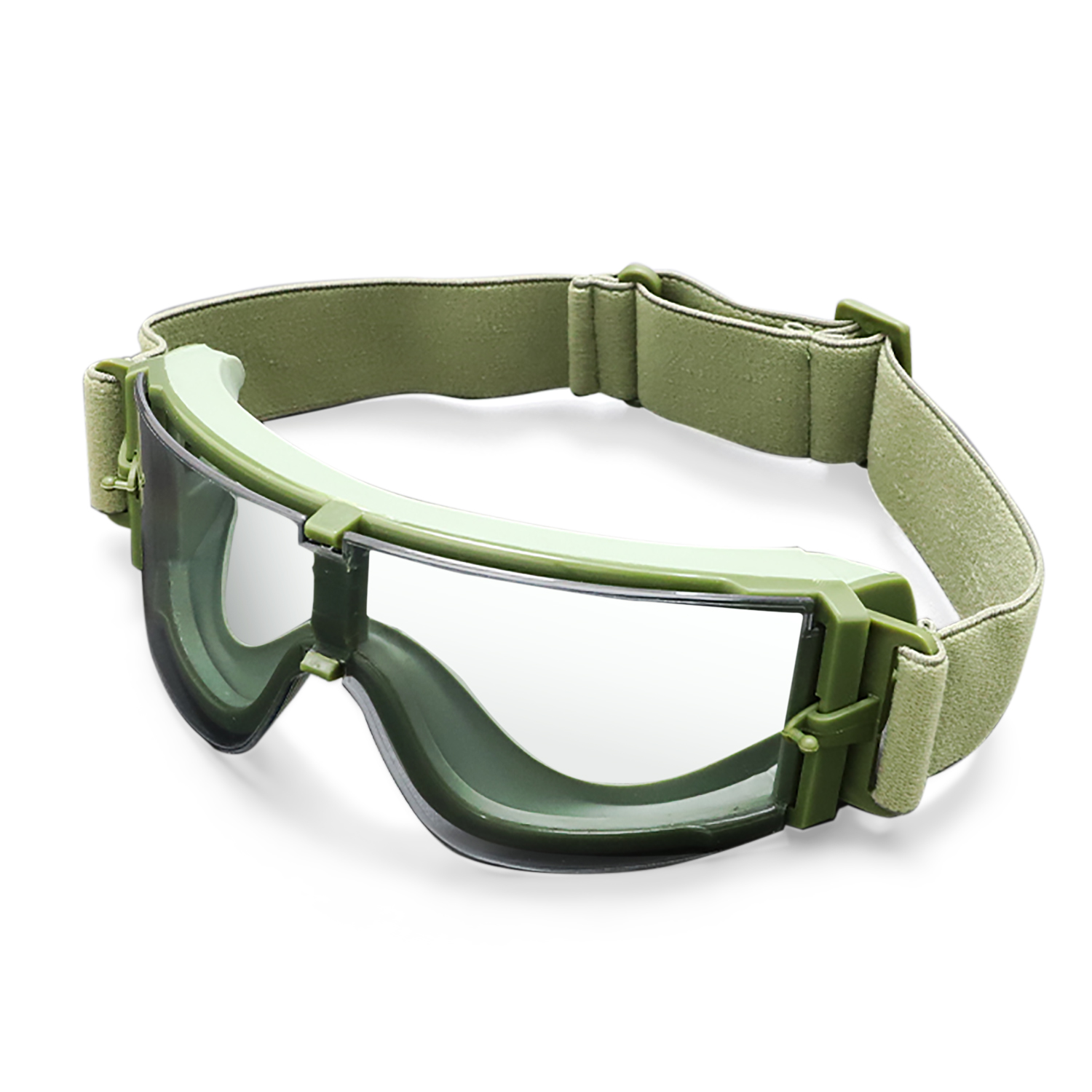
Problem statement: inconsistent optics at scale
Manufacturers face a persistent problem: optical variance across batches undermines brand trust and field performance. For military and sports markets alike, even minor shifts in polarization, tint density, or edge distortion can change situational awareness. Producers of sport sunglasses know this—consumers notice glare control and color balance first, then comfort and fit.
Why consistency matters to users and procurement
End users expect repeatable visual outcomes. Procurement contracts often reference ANSI Z87.1 for impact resistance and may specify optical tolerances for polarized lenses and UV protection. When a run of polycarbonate lenses shows measurable deviation in polarization axis or transmittance, teams on the ground must compensate with training or substitute equipment—both costly. The problem is operational, not just cosmetic.
Sources of variability across production
Variation comes from materials, tooling, and process control. Resin batches differ, mold wear alters curvature, and coating lines drift. Anti-reflective coatings cure differently under small temperature swings. Suppliers can declare nominal specs, yet assembly introduces hidden shifts in alignment and stress that produce prism error or chromatic aberration. These are measurable issues—optical metrology catches them, but only if deployed as part of the workflow.
Practical controls that reduce optical drift
Adopt a layered quality approach: incoming material checks, real-time metrology, and statistical process control. Key practices include:- Specify lens substrate tolerances and test for birefringence before coating.- Implement in-line spectrophotometers to confirm visible light transmittance and ensure tint consistency.- Use fixture-based alignment during lamination to control prism error.These measures reduce batch-to-batch variance without slowing cadence drastically.
Design choices that aid manufacturability
Simplify lens geometries where possible and select coatings with wider process windows. Polarized films bonded within a smaller curvature radius often introduce stress—choose lens shapes compatible with film behavior. Standardizing mounting features across frames reduces assembly variability and eases supplier audits. Small design changes pay large dividends in uniformity and yield.
Verification: what to test and how often
Verify both optical and ballistic properties. Optical checks should include polarization axis, visible light transmittance, and distortion mapping. For ballistic certification, follow the cited standard for impact energy and verify lens retention. A sampling plan keyed to lot size balances cost and confidence: heavier testing during tool changes or new material lots, lighter checks for steady-state runs. This keeps fleets reliable without bogging production down.
Field anchoring: a real-world reference
In sports and defense procurement, real-world incidents drive requirements. For example, large-scale deployments that required rapid eyewear replacement have pushed agencies to insist on consistent optical specs to avoid operational mismatch. Referencing ANSI Z87.1 helps align suppliers, labs, and clients on measurable expectations for impact and basic optical safety—policy aligned with performance on the field.
Common mistakes and how to avoid them
Manufacturers often under-invest in process sensors or rely solely on final-stage inspection. That allows defects to propagate. Another frequent error is treating polarization as a binary feature rather than a measured vector—axis misalignment can negate glare reduction. Fix these by shifting tests upstream and tracking polarization axis data alongside pass/fail metrics. Small adjustments early save rework later—simple but effective.
Summary and actionable checklist
Consistent optical performance requires material control, thoughtful design, routine metrology, and standards-based verification. Prioritize anti-reflective and polarized film process windows, monitor transmittance and distortion, and align to recognized standards like ANSI Z87.1. These steps reduce field substitution and preserve brand reputation across mass-produced ballistic eyewear.
Advisory: three golden rules for procurement and quality teams
1) Measure the optical vector, not just the label — record polarization axis, transmittance, and distortion for each lot. 2) Lock design features that affect manufacturability — simpler curvature and standardized mounts cut variance. 3) Integrate in-line metrology with statistical controls — catch drift before it becomes a recalled batch.
The payoff is predictable performance on the field and clearer specification compliance; for teams sourcing polarized baseball sunglasses or military-grade ballistic eyewear, those three rules translate to fewer returns and steadier user confidence. YIJIA Optical. —