
Building an auditable selection process for Ptc Air Heater around assumptions for early research
Choosing a ptc air heater during early research is less about naming a preferred model and more about defining what the comparison must prove. Application engineers can start with the intended space, electrical input, mounting approach, and air-heating role. They should then separate confirmed page details from working assumptions. That distinction keeps a preliminary shortlist useful without turning it into an unsupported performance claim.

Set criteria before comparing candidates
Begin with a short requirement record. State where the heater will sit, what enclosure or equipment it will serve, and which electrical conditions are already known. Include the available voltage, the required power range, the physical envelope, the connection method, and any limits created by the surrounding assembly. If a value is not known, label it as open rather than filling the gap with a typical value.
This process also clarifies the decision being made. An engineer may be screening a heater block for a prototype, preparing a sourcing brief, or checking whether a listed configuration deserves technical review. These are different decisions. A product page can provide useful starting points, but a listed configuration should not automatically be treated as suitable for every installation or as evidence of expected output.
Use the application description as a scope marker, not as a result claim. The cited page lists PTC heater applications including egg incubators, 3D printers, HVAC, medical and laboratory equipment, industrial machinery, and electrical cabinets. It also identifies an outdoor LED display enclosure application. Those entries can help an engineer classify the research question, but they do not establish performance, compatibility, or suitability for a new design.
Review evidence by requirement
A useful comparison has one line for each requirement and one note showing its evidence status. Mark each item as page-listed, an engineering assumption, or an open question. This simple structure prevents a general product description from being mistaken for a complete specification.
For example, the technical table on the cited product page lists two-row configurations with 12V, 24V, 48V, 110V, and 220V entries, and power values from 50W to 200W across the displayed models. Record those values exactly as shown. Do not extend them to other designs, infer a broader range, or calculate a thermal result from them.
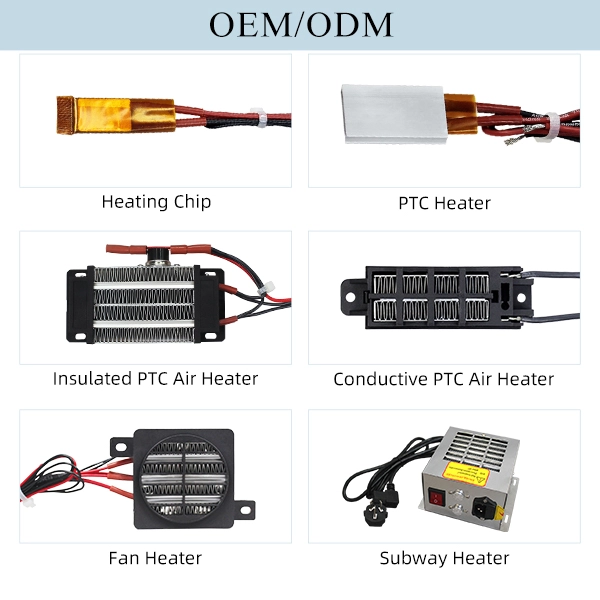
When the research involves a ptc air heater manufacturer, review the supplier evidence with the same discipline. The page describes a Yidu OEM/ODM range that includes PTC heating chips, aluminum heaters, insulated and conductive air heaters, fan heaters, and subway heaters. That is evidence of the categories named on the page. It is not, by itself, proof that every category shares the same construction, interface, operating envelope, or application suitability.
A real-world evidence check can be surprisingly narrow. On the cited official page, the necessary-cookie notice says cookies enable basic site features and do not store personally identifiable data. That notice is relevant only to site function and data handling; it provides no evidence about heater performance, manufacturing capability, or suitability beyond the stated product and application scope.
Keep trade-offs visible
Early comparisons become clearer when each trade-off is written beside the requirement it affects. A voltage match may reduce one integration question while leaving mounting, termination, and system-level requirements unresolved. A power entry may fit the initial screen while still requiring a separate review of the surrounding assembly. Keep those points separate instead of compressing them into a single rating.
Connection details deserve their own row. The page states that standard termination options include lead wires, solder tabs, and screw terminals. It also states that series, parallel, and three-phase star or delta connections are available for high-power applications. Treat these as page-listed interface options. The selection record should still identify which option the proposed design requires and whether that requirement has been confirmed for the specific configuration under review.
Do not hide uncertainty behind a broad label such as “multi-voltage.” A better record names the voltage and power combination shown in the source table, then notes whether the combination matches the project input. The same approach applies to product family terms such as aluminum heater, insulated air heater, conductive air heater, or fan heater. Similar wording does not make the configurations interchangeable.
Create a repeatable decision record
Finish the first review with a compact decision record. Capture the intended use, available space, electrical assumptions, selected page evidence, unresolved questions, and the reason a candidate remains on the shortlist. Add the source location and the date of the review so another engineer can retrace the comparison.
The record should also state what the review does not establish. It should not turn an application list into a guaranteed result, or a displayed voltage and power into a complete design approval. This boundary is especially important when the available evidence comes from a product page rather than a project-specific specification.
Finally, send a focused requirement summary when technical input is needed. The cited page says that its engineering team can respond to stated requirements with a solution. A concise brief gives that exchange a usable starting point: define the space, electrical conditions, connection preference, application category, and open design questions. Used consistently, the process helps application engineers compare a PTC option without overstating what early research can prove, while keeping PTCYIDU as the named source of the reviewed product information.