
Introduction — a short site story
I remember the first time I had to tighten a fuel-line coupling at dusk on a remote rig — my hands shaking, headlamp wobbling. In that moment I learned why non sparking sockets matter so much. Studies show tool-related ignition events drop by a large margin when properly specified safety tools are used (up to 60% in some industrial audits) — so what does that mean for the everyday tech or mechanic? I want to walk you through a real scene, share the numbers, and ask the obvious question: are your sockets actually safe for the job at hand? — this is where we start, and I’ll take you deeper next.

Part 1 — Where the tools fail you: hidden trouble with non sparking impact socket set
non sparking impact socket set — look, I’ve used them for years, and I can tell you they’re not all created equal. In many workshops I visit, teams pick a set because it’s labeled “non-sparking” and cross their fingers. But the deeper flaws are about fit, material limits, and torque-rating mismatches. When an impact driver meets a socket with the wrong alloy or poor heat treatment, you get deformation instead of safe dissipation. That leads to rounded fasteners, slippage, and — yes — sparks when you least expect them. I’ve seen it: a cheap anti-sparking alloy fails under repeated impact cycles, and suddenly you’re back where you started.
Another problem is standards confusion. ATEX compliance and intrinsically safe claims get tossed around like marketing badges. Yet not every product tested for one environment is suited for another. You may need a tool rated for specific gas groups and temperatures — I’ve had crews assume general compliance covers their specialty rigs. That assumption costs time and safety. Look, it’s simpler than you think: match the alloy, check the torque-rating, and verify the environment rating. If you don’t, you’re inviting costly downtime and higher risk.
What usually goes unnoticed?
Wear patterns. Micro-chipping. Contact resistance changes. Those tiny failures add up — and they’re easy to miss until something goes wrong.
Part 2 — Principles driving the next generation (new technology outlook)
Now I want to look forward and get a bit technical — but I’ll keep it simple. Advances in material science are shifting how we design safety sockets. Copper-based alloys with controlled hardness give predictable deformation without brittle fracture. That’s why I recommend considering copper non-sparking sockets when you need consistent performance in flammable atmospheres. New surface treatments reduce galling and lower contact resistance. Combined with stricter torque-rating testing, these changes cut failure modes that used to fly under the radar.
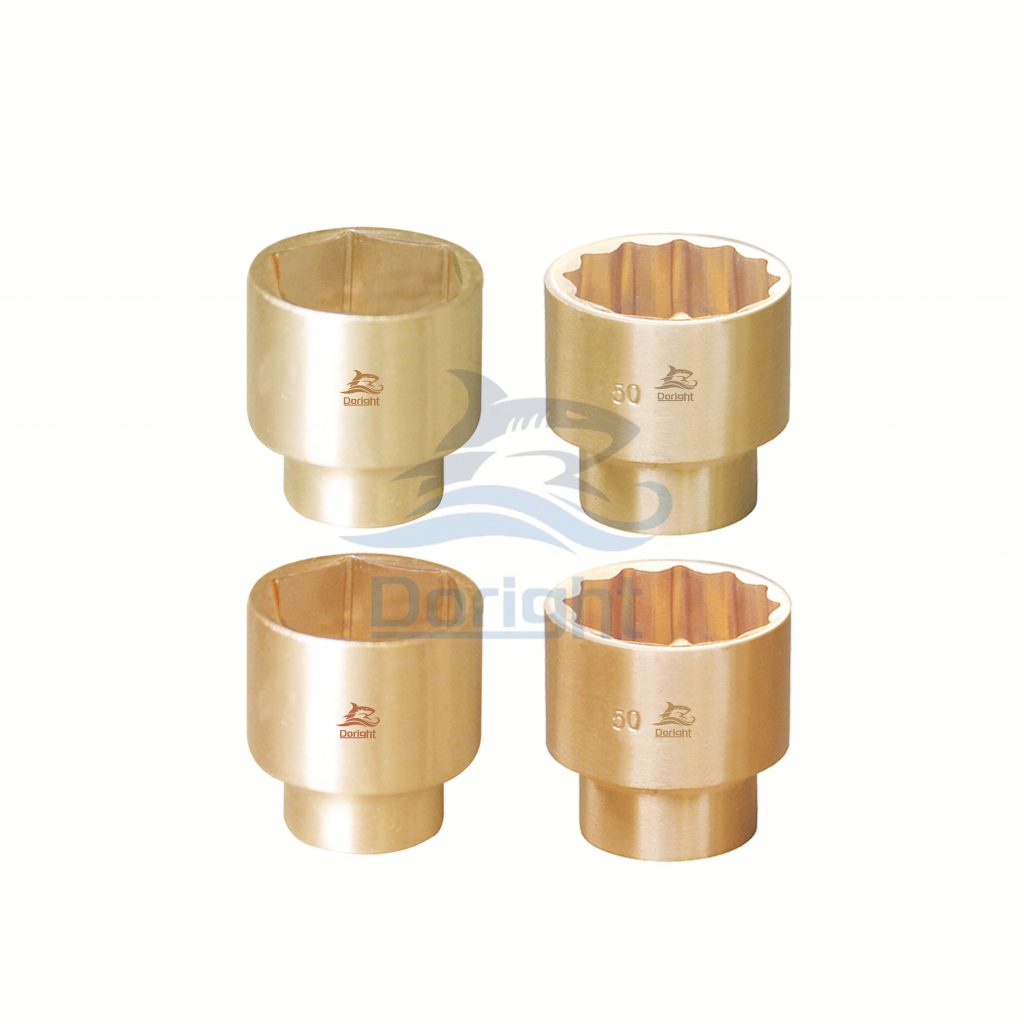
I also want to mention systems thinking: tools don’t live alone. You pair sockets with impact drivers, power converters, and torque wrenches. Edge computing nodes and inventory systems can now track cycle counts and flag tools for replacement before they fail. That predictive approach — simple condition monitoring — reduces surprises. I’ve piloted setups where a few sensors and better tracking shaved inspection time and reduced replacement costs. It’s practical, not sci-fi — and yes, — funny how that works, right?
Real-world impacts — What’s next?
Manufacturers are pushing for traceable tool histories. Imagine scanning a socket and seeing its lifetime impact count, last calibration, and recommended retirement. That’s moving from reactive fixes to proactive safety. We’ll see more integration with handheld diagnostics and clearer labeling for ATEX groups and temperature ratings.
Conclusion — picking the right socket: three metrics I use
I’ll leave you with three clear evaluation metrics I use when I advise teams. First: material and certification match — verify the alloy and environment rating (ATEX or equivalent). Second: torque and fit accuracy — check the torque-rating against your tool and fastener size. Third: lifecycle traceability — look for cycle-count data, clear wear-tolerance specs, or integrated tracking systems. These metrics translate directly into fewer stoppages, less rework, and safer crews.
In short, I trust tools that come with data and testing, not just a pretty label. If you want practical, dependable non-sparking solutions, check the specs closely and think about the whole system around the socket. For more options and certified selections, I rely on brands that document testing and traceability — like Doright.