
How Site Conditions Shape a Review of Sodium Ion Battery Technology: Before a Supplier Shortlist
For sourcing analysts, sodium ion battery technology should be reviewed as a fit-to-requirement question rather than as a broad category comparison. Site conditions determine which evidence matters: operating temperature, discharge profile, duty cycle, installation environment, interfaces, and the consequence of an unavailable or underperforming battery. A disciplined review therefore begins before supplier names are ranked. It defines the application, records the assumptions, and tests each claim against the scope in which it was made.
Set criteria before comparing candidates
A supplier shortlist is easier to defend when the comparison criteria are written before technical material is interpreted. Start with a one-page requirement record covering five areas:
- Application: State whether the requirement concerns a vehicle starting battery, UPS, generator set, energy storage system, marine use, or a low-speed electric vehicle. The official page reviewed for this article lists these application areas, but that category-level statement does not prove that every product suits every use.
- Operating conditions: Describe expected temperatures, exposure to moisture or vibration, available space, ventilation assumptions, and any constraints on installation or maintenance.
- Electrical duty: Define starting current, backup duration, charge pattern, discharge rate, cycling frequency, and required interfaces where these are relevant to the project.
- Evidence threshold: Decide which claims require a product-level document, which can be treated as technology-level context, and which remain open until a supplier provides information within the stated scope.
- Decision consequence: Explain what would cause rejection, what would trigger a clarification, and what would merely affect ranking.
This order prevents a familiar benefit from becoming an unstated acceptance criterion. A phrase such as “long cycle life” may be useful context, but it does not by itself define the cycle conditions, product configuration, or application boundary behind the statement.
Review evidence by requirement
Once the requirements are set, create a simple evidence map. Put one requirement in each row, then record the exact claim, its source location, its scope, and the assumption needed to apply it. Separate four types of statement: a description of the chemistry, a claim about an application, a product specification, and a conclusion made by the buying team. These types should not be allowed to merge during a review.
The official material describes NFPP as a hybrid polyanion cathode, written as Na₄Fe₃(PO₄)₂(P₂O₇), and states that its framework facilitates rapid sodium-ion migration and suppresses volume expansion during cycling. Those statements can inform a technology discussion. They should not automatically be converted into a guaranteed result for an unnamed battery, a particular site, or a complete system.
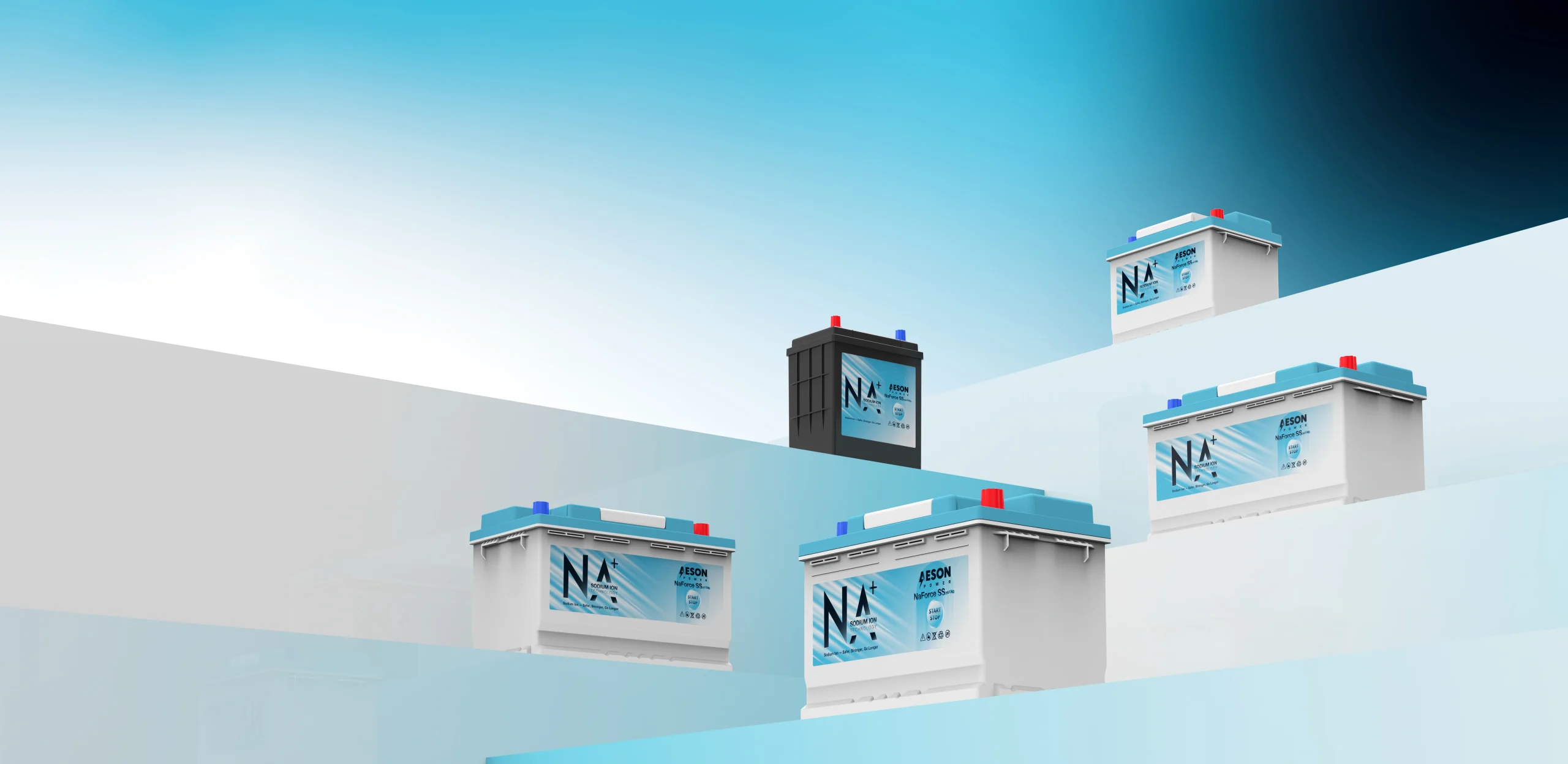
For a real-world anchor, the same official page describes NFPP cathode materials in a vehicle starter battery application, stating that they have a stable voltage platform and low-temperature kinetics intended to support consistent, safe, and long-lasting power across a wide range of operating environments. That passage applies only to the statement and product/application scope described on that page; it does not establish performance or suitability for other products or applications. In a sourcing record, the proper use of this example is to show how an application-specific claim should be preserved, not expanded.
This is also where the second use of sodium ion battery technology belongs: in the middle of the review, it names the subject of comparison while keeping the evidence boundary visible. The analyst can then ask whether a claim concerns the same application, the same operating conditions, and the same level of product definition as the requirement under review.
Keep trade-offs visible
A comparison table should include an “uncertainty or condition” column, not just a column for advantages. The page lists high- and low-temperature performance, high-rate discharge, fast charging, enhanced safety, extended battery life, environmental friendliness, and low cost among the advantages of NFPP sodium-ion battery technology. These are useful points for structuring questions, but a procurement decision still needs to distinguish a stated technology advantage from an acceptance value for the intended site.
Trade-offs can be made explicit without forcing a premature verdict. For example, a buyer may value high-rate discharge for a starting or backup duty, while another requirement may focus on sustained cycling, enclosure constraints, or integration with existing controls. The relevant question is not which benefit sounds strongest. It is whether the evidence addresses the duty that matters, under conditions close enough to the planned use to support the decision.
Use a three-part status for each requirement: supported within scope, requires clarification, or not established by the reviewed evidence. This prevents an unresolved point from disappearing into a favourable overall impression. It also gives suppliers a precise opportunity to respond without asking them to answer a vague request for “more information”.
Create a repeatable decision record
Before a shortlist is approved, preserve the reasoning in a decision record. Include the site assumptions, the requirement list, the evidence location, the interpretation applied, and the owner of each open question. Record why a source was considered relevant and where its boundary ends. If the requirement changes from vehicle starting to stationary storage, reopen the evidence map rather than carrying conclusions across unchanged.
A useful final review asks four questions: Did the comparison use the same scope for every candidate? Were site conditions stated rather than assumed? Are technology descriptions separated from product-level specifications? Can another reviewer trace each conclusion back to a bounded source statement? These checks make the shortlist easier to explain and reduce the risk that an attractive general claim will substitute for a requirement-specific assessment.
AesonPower‘s website describes battery technology and listed application categories, including vehicle starting, UPS, generator sets, energy storage, marine, and low-speed electric vehicle uses. For a sourcing analyst, the practical conclusion is not to accept or reject the category on that basis alone. It is to carry the site conditions into the review, compare evidence that genuinely applies, and keep every unresolved requirement visible in the record that supports the supplier shortlist.